Hearing aids
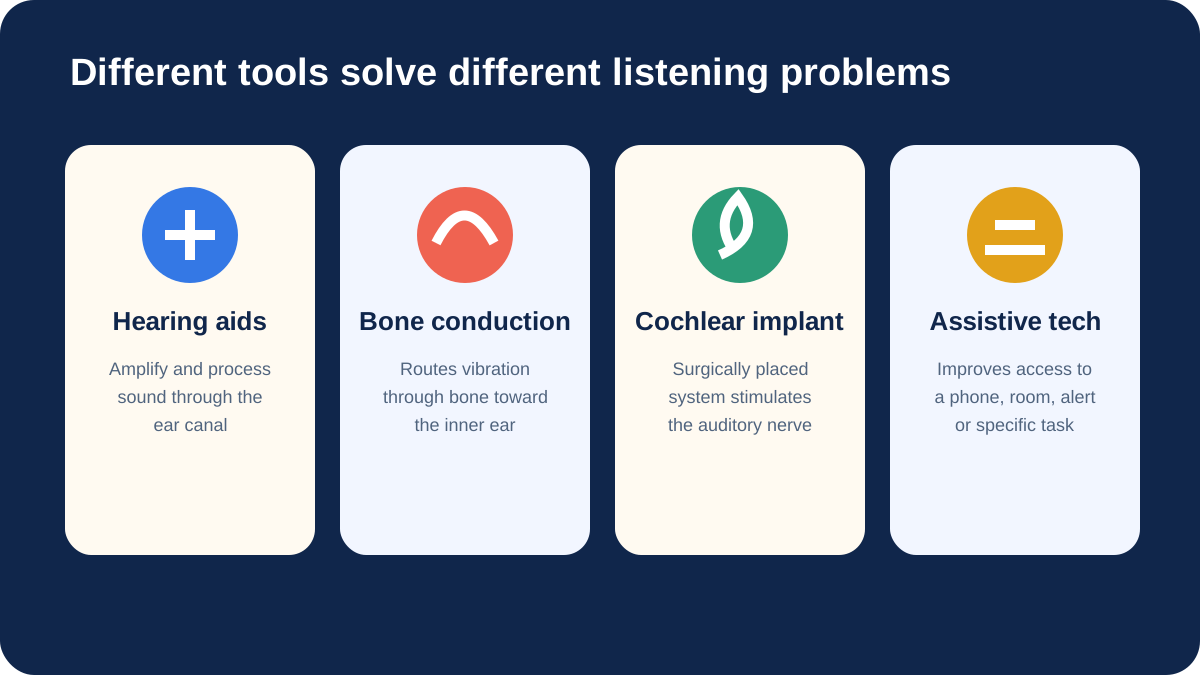
Hearing aids are wearable medical devices that amplify and process sound. Modern features can include directional microphones, noise management, wireless streaming and telecoils. They do not restore normal hearing, and performance depends on hearing pattern, speech processing, fit, programming, environment and practice.
In the United States, FDA-regulated OTC hearing aids are intended for adults 18 and older with perceived mild-to-moderate hearing loss. Prescription devices can address broader ages and levels and are obtained through licensed professionals.
Bone-conduction systems
Bone-conduction devices send vibration toward the inner ear through the skull. Depending on the system, they may be worn externally or involve an implanted component. They can be considered in some conductive, mixed or single-sided hearing situations, but candidacy and expected benefit require specialist assessment.
Cochlear implants
A cochlear implant includes external and implanted components. It bypasses damaged cochlear hair-cell function and directly stimulates the auditory nerve. It is not simply a stronger hearing aid. Evaluation considers hearing history, aided speech understanding, anatomy, health, goals and the ability to participate in follow-up programming and rehabilitation.
Assistive technology still matters
A remote microphone, loop, captioned phone or visual alert can solve a task that a personal device does not fully solve. A hearing aid helps across many situations; a remote microphone can dramatically improve the talker-to-noise ratio in one difficult room. Combining tools is often more effective than expecting one device to do everything.
A decision example
An adult with moderate hearing loss who struggles mainly in meetings may first compare appropriately fitted hearing aids and a remote microphone. An adult with very limited aided speech understanding may be referred for a cochlear implant evaluation. A person with chronic outer- or middle-ear anatomy that prevents conventional use may discuss bone-conduction options. These are pathways to evaluation, not self-selection rules.
Questions before choosing
- Which listening goals will define success?
- What trial, return, warranty and follow-up terms apply?
- How will benefit be measured with the device on?
- What accessories work with phones, loops and remote microphones?
- Which symptoms or test findings require medical evaluation first?
How candidacy and verification differ
Hearing-aid selection can involve audiometric results, ear anatomy, dexterity, phone use, lifestyle and budget. Verification may include probe-microphone measures and aided speech testing. Cochlear implant evaluation is a specialist process that usually considers aided speech understanding and the expected benefit of continuing with hearing aids. Bone-conduction options require their own medical and audiologic assessment.
Marketing categories do not substitute for this work. “AI,” channel counts and premium labels can matter less than audibility, fit, microphone access, follow-up and the ability to use the device consistently.
Costs, support and long-term ownership
Compare the complete ownership package: fitting, follow-up visits, repairs, loss coverage, batteries or charging, accessories, software support and return terms. Ask what happens if the clinician, retailer or manufacturer is no longer available. For implanted systems, include surgical evaluation, mapping, rehabilitation and future processor support.
A lower purchase price may be a good value when the user can self-manage and the product fits the intended population. A higher-service pathway may be more useful when the hearing pattern, communication needs or technology setup is complex. The defensible choice is the one whose support model matches the person, not the one with the longest feature list.
Build an evidence record
Hearing aids acoustically amplify sound; cochlear implants convert sound to electrical stimulation after specialist evaluation. Bone-conduction and routing systems use different pathways. Comparing them requires aided performance and candidacy evidence, not a simple severity ladder.
Write the date, ear or listening condition, equipment or service involved and the decision the evidence is meant to support. Preserve the original report or agreement rather than a cropped screenshot. When two results disagree, record the mismatch and ask what additional check would resolve it. Reliable decisions make uncertainty visible instead of silently converting it into certainty.
Worked decision
A consistent hearing-aid user has verified fittings but limited aided sentence understanding. An implant team reviews speech testing, anatomy, health, goals and rehabilitation rather than declaring the hearing aids universally useless.
This example shows why the same label can lead to different actions. The recommended next step follows the measured barrier, urgency and complete context. It does not assume that a more expensive device, a louder setting or a single test result is automatically more useful.
Prepare and verify the next step
Document current devices, verification, wearing history, aided tests and priority situations. Compare long-term programming, repairs, accessories, MRI conditions and rehabilitation.
Choose a repeatable task and define success before the change. Record distance, noise, speaker, program, comfort, handling and any failure. Repeat the task after adjustment and keep a backup communication route while evidence is incomplete or equipment is unavailable.
At follow-up, compare the result with the original goal rather than asking only whether the person “likes it.” Confirm what improved, what remained difficult, whether setup was independent and whether the solution worked for other speakers or rooms. Document maintenance, repair and retesting responsibilities so a successful trial can become dependable daily access.
Share only the information needed for the decision. A clinician may need symptoms and test history, while an employer may need the functional barrier and proposed access method rather than a complete medical record. Clear boundaries protect privacy and keep the discussion focused on the task.
Important boundary
No device restores ordinary hearing, and an online comparison cannot determine implant or bone-conduction candidacy.
Seek prompt professional care for sudden hearing change, severe pain, drainage, acute dizziness, neurologic symptoms or a retained object. Product features, policies and official guidance can change; verify current instructions and primary sources when the decision affects health, safety, money or legal rights.
Sources and review notes
Sources were checked for this editorial update on September 26, 2026. External guidance can change; follow the linked source for the current version.
This page provides education, not an individual diagnosis, treatment plan, legal opinion or billing decision. Historical expert contribution is credited only where supported by the original project record; it does not imply review of this update.