

Hearing Tests
Understanding a Hearing Evaluation
A hearing evaluation is a set of measurements, not a single pass-or-fail score. Learn what each part adds and how the results fit together.
Read guideChoose a learning path, begin with a practical guide or browse the complete evidence-led library. Every guide connects the explanation to a real decision, limitation and next step.
Audiograms, tympanograms and what each measurement can—or cannot—show.
Explore hearing tests →02Sound pathways, types of hearing loss and the context behind a result.
Build the foundation →03Hearing aids, implants, bone conduction, microphones, captions and alerts.
Compare technology →04Workplace tasks, documentation, effective communication and practical trials.
Plan the next conversation →A hearing evaluation is a set of measurements, not a single pass-or-fail score. Learn what each part adds and how the results fit together.
Read guide
An implant evaluation is not a single audiogram cutoff. A specialist team considers aided access, speech understanding, anatomy, health, communication goals and realistic rehabilitation needs.
Read guide
The most useful request describes the work task and communication barrier before naming a device.
Read guide65 guides across four learning paths
A hearing evaluation is a set of measurements, not a single pass-or-fail score. Learn what each part adds and how the results fit together.
Read guide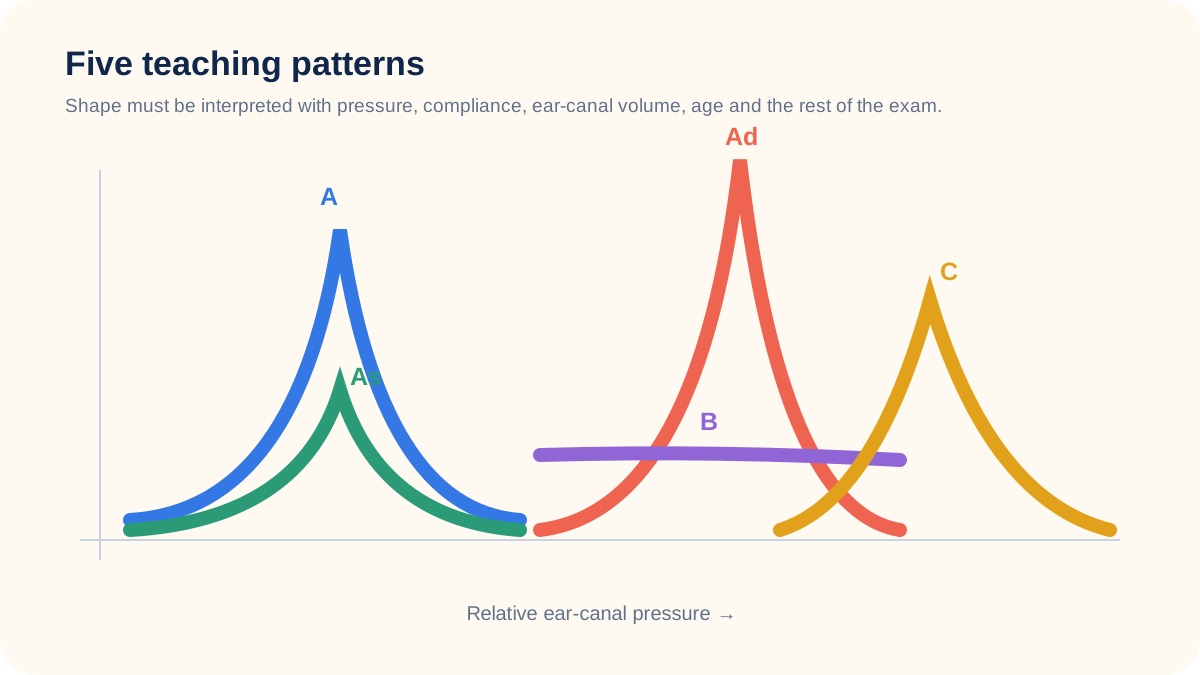
Use the curve as one piece of a middle-ear assessment—not as a stand-alone diagnosis.
Read guide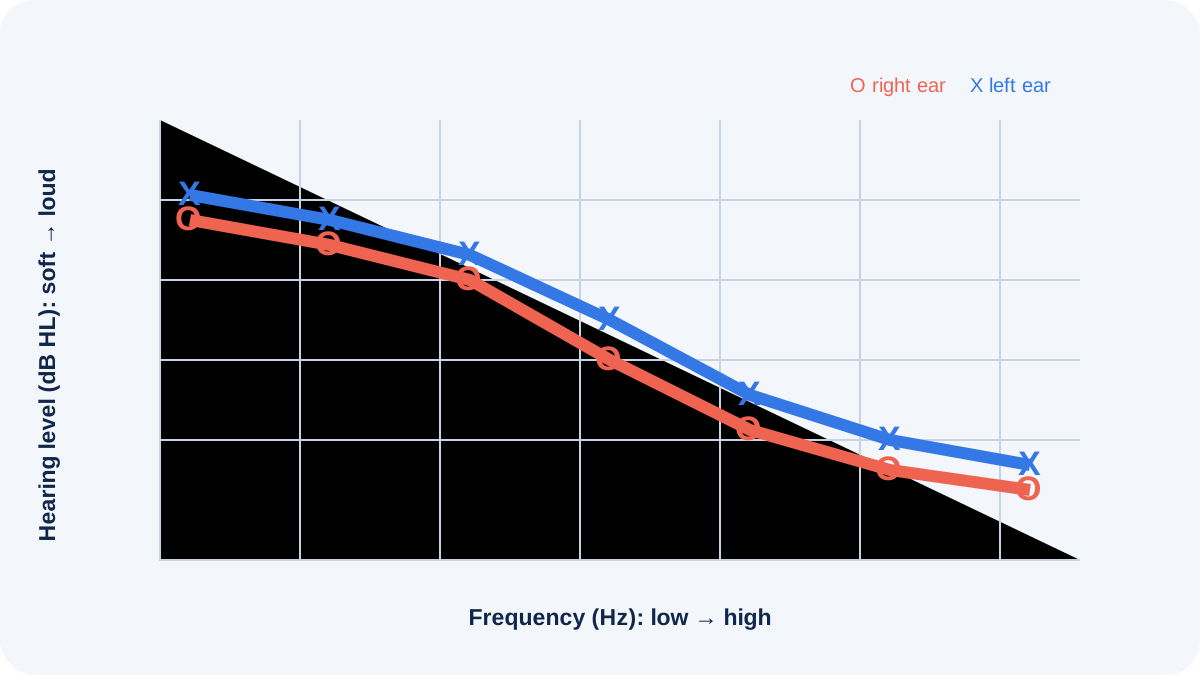
An audiogram is a map of responses across pitches. Read the axes and symbols first, then ask what the pattern means for everyday communication.
Read guide
Hearing begins as changing air pressure, becomes mechanical motion, then fluid movement and finally patterns of neural activity interpreted by the brain.
Read guide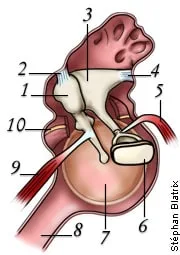
Conductive hearing loss describes where sound transmission is reduced. It does not name one disease or one treatment.
Read guide
Sensorineural describes a pattern involving the cochlea or auditory nerve pathways; it is not a complete diagnosis.
Read guide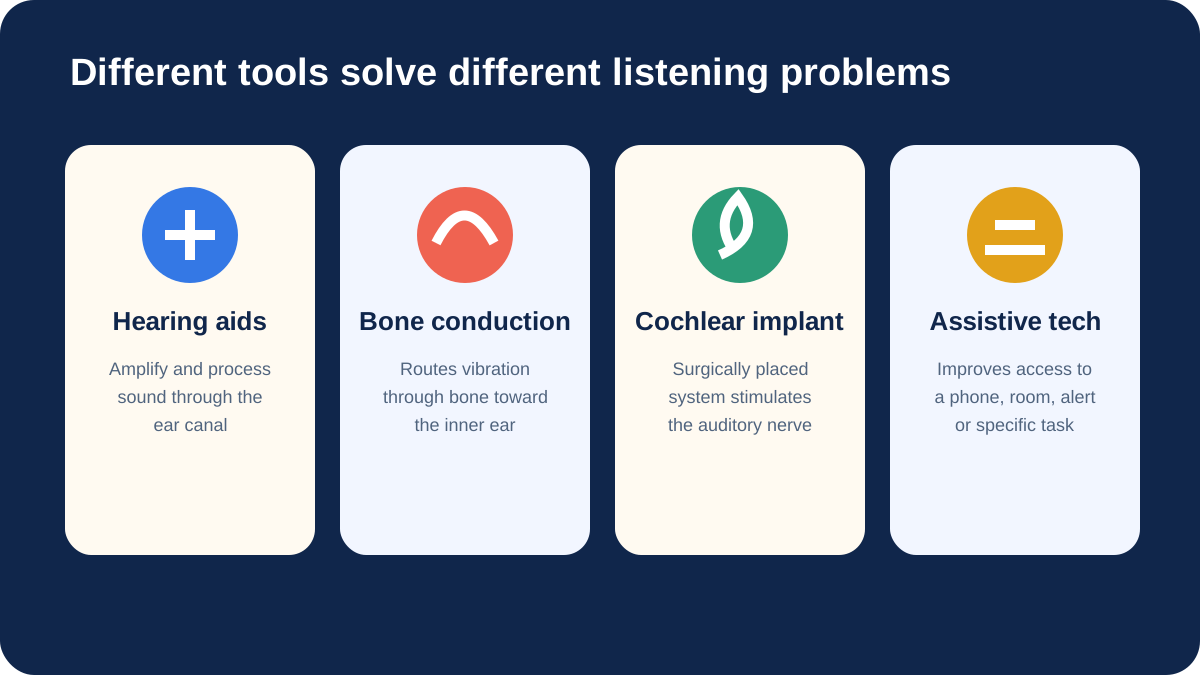
These technologies are not interchangeable upgrades. Each follows a different pathway and candidacy process.
Read guide
Start with the listening task—distance, noise, telephone access or an alert—then compare technology.
Read guide
Phone and alert access works best when the primary channel and the backup are planned together.
Read guide