Product & technology guide

Compare the technology, not the marketing claim.

Start with the access problem. Then compare representative product types by signal pathway, strengths, tradeoffs, suitable situations and the evaluation or trial each one needs.

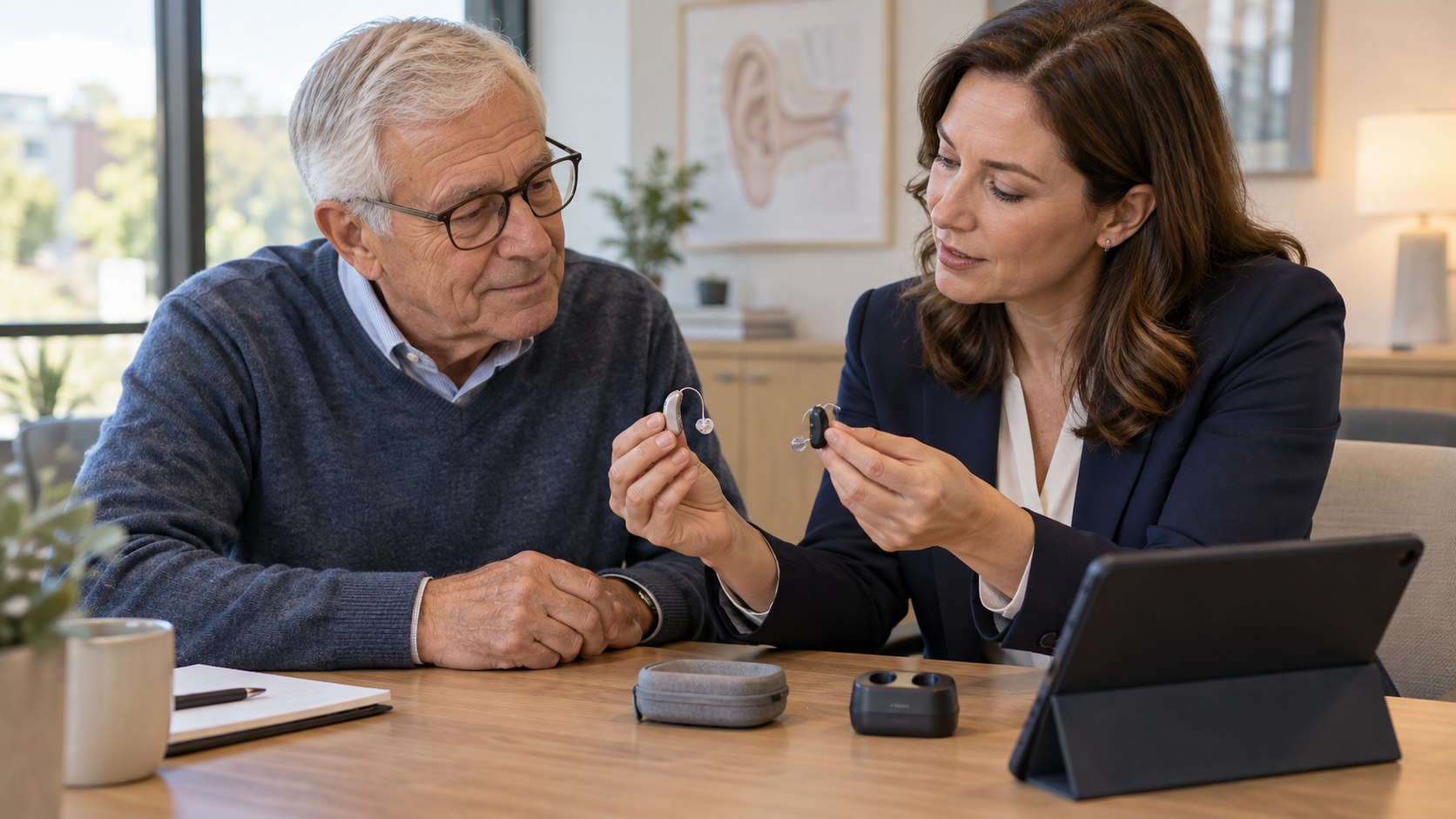
Adult comparing representative hearing product styles with an audiologist
01Define the task

Conversation, distance, noise, media or alerts?

02Check candidacy

Hearing pattern, ear health, handling and preferences.

03Trial and verify

Measure fit and benefit in the situations that matter.

04Plan support

Service, training, repairs, compatibility and backup.

Representative product types

Twelve useful categories to understand first

These are educational product forms, not rankings or brand endorsements. Models and candidacy rules change; verify current specifications and professional recommendations.

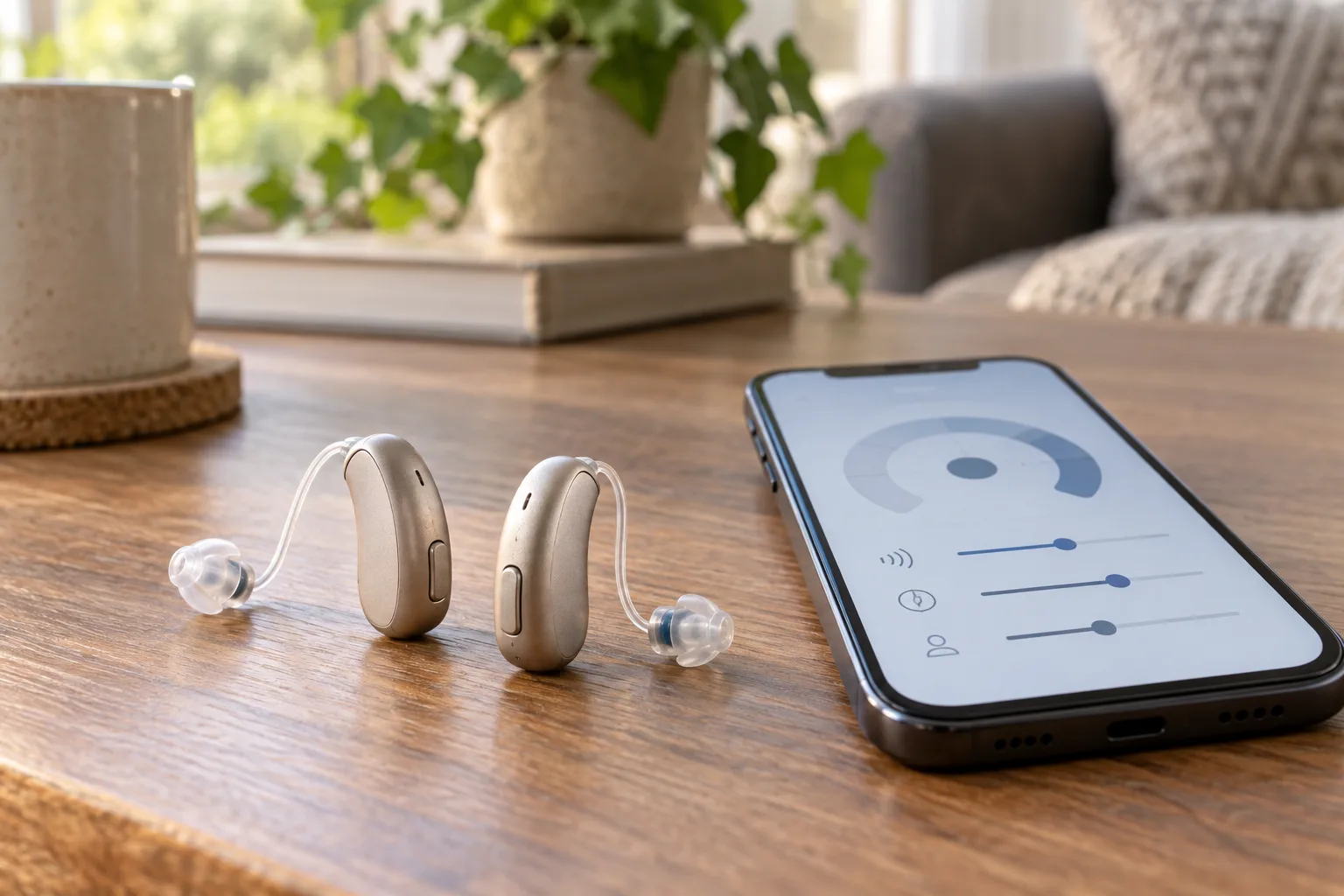
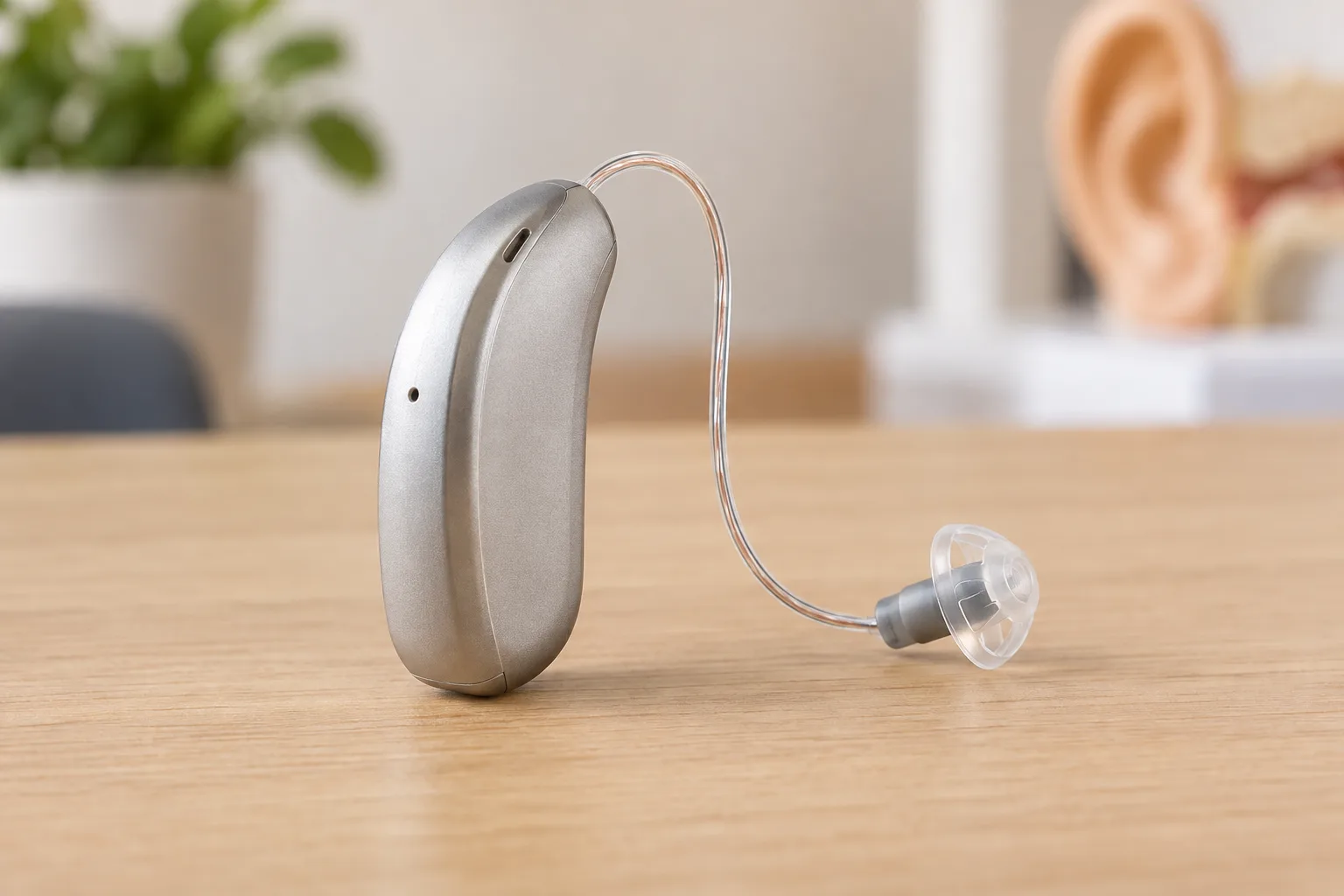
Representative view of receiver-in-canal hearing aids
01 · RIC / open-fit

Receiver-in-canal hearing aids

Small behind-the-ear body with a receiver in the ear canal.

Advantages
Broad fitting flexibility, discreet appearance, rechargeable and wireless options are common.
Limitations
Open fittings may provide limited low-frequency output; small receivers, domes and wax filters need care.
May suit
Many adults with mild-to-severe sensorineural patterns who want flexible features and professional fine-tuning.
Read the full technology guide →
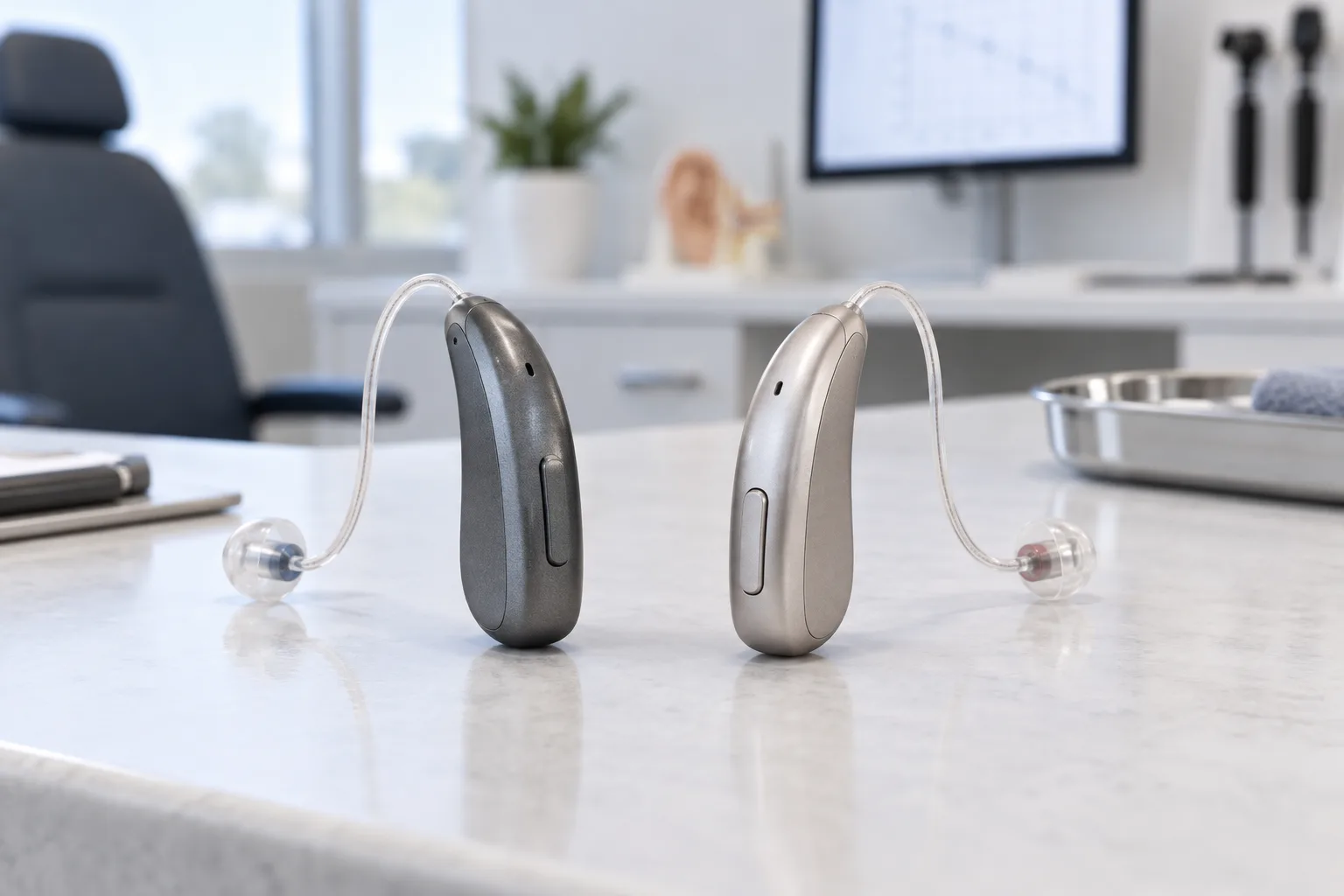
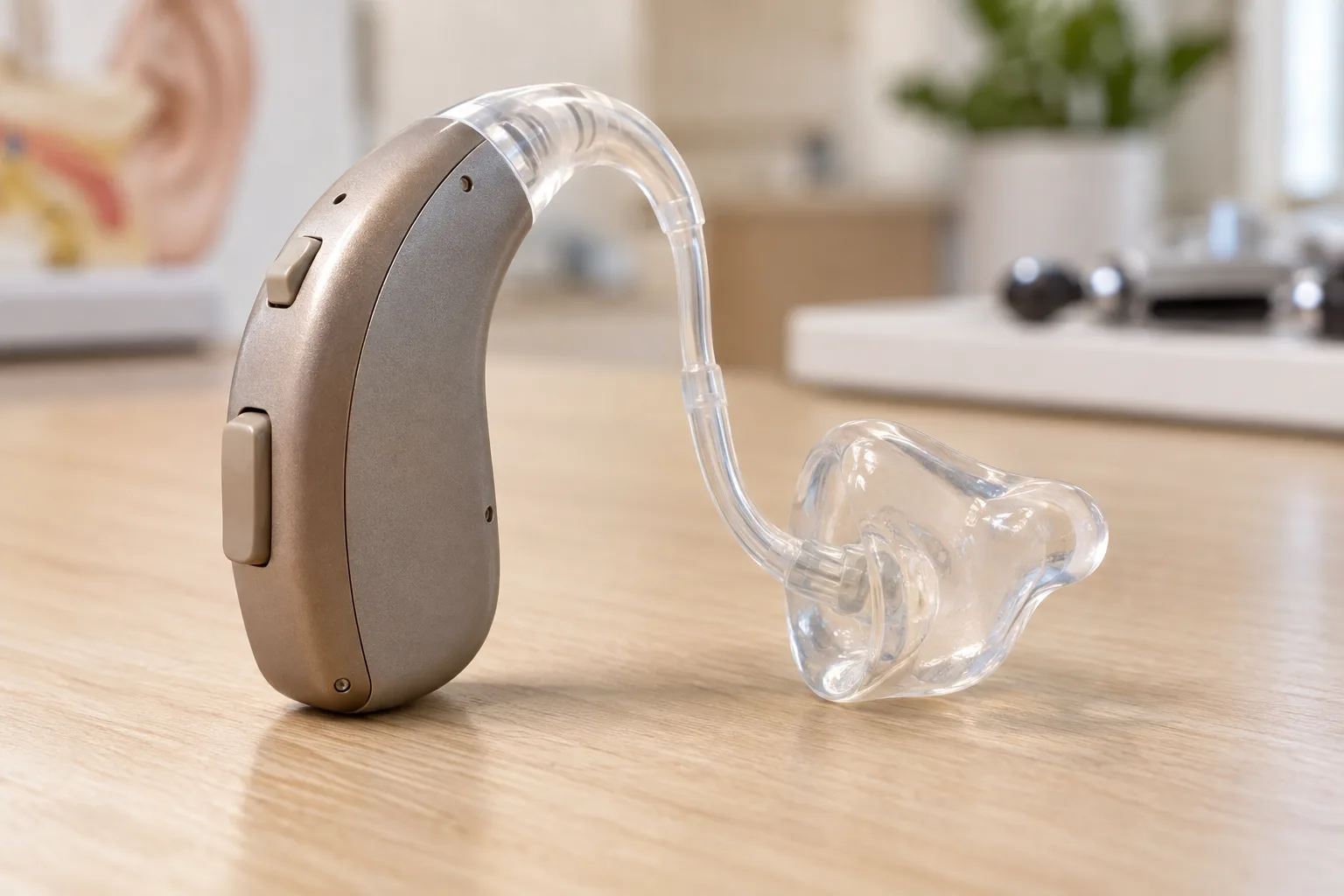
Representative view of power behind-the-ear hearing aids
02 · Power BTE

Power behind-the-ear hearing aids

Larger body behind the ear connected to a custom earmold.

Advantages
More output headroom, robust controls and easier handling than very small styles.
Limitations
More visible; earmold fit, tubing and feedback need ongoing service.
May suit
People needing greater output, secure retention or easier physical controls.
Read the full technology guide →
Representative view of self-fitting otc hearing aids
03 · OTC self-fitting

Self-fitting OTC hearing aids

Regulated over-the-counter air-conduction hearing aids adjusted by an adult user.

Advantages
Direct access, home setup and potentially lower entry cost.
Limitations
Intended only for adults with perceived mild-to-moderate loss; support and verification vary.
May suit
Adults 18+ who fit the intended use, can manage setup and have no red-flag symptoms.
Read the full technology guide →
Representative view of cros and bicros systems
04 · Sound routing

CROS and BiCROS systems

A microphone on one side routes sound to a device on the better-hearing side.

Advantages
Improves awareness of talkers on the poorer side without ear surgery.
Limitations
Does not restore binaural hearing or ordinary localization; noise placement matters.
May suit
Some people with unaidable hearing on one side after ear-specific professional evaluation.
Read the full technology guide →
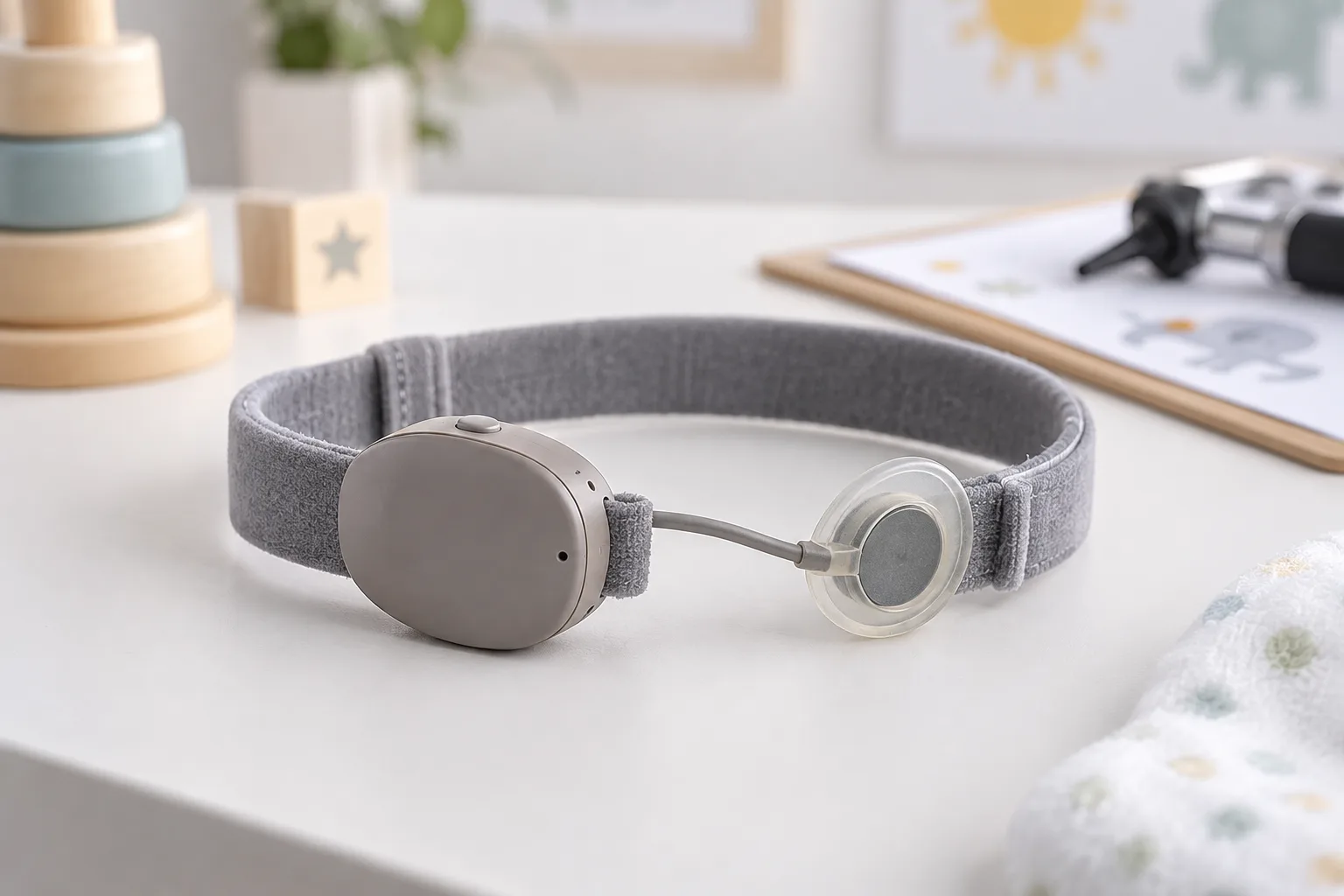
Representative view of bone-conduction systems
05 · Wearable or implanted

Bone-conduction systems

A processor sends vibration through the skull toward a functioning cochlea.

Advantages
Can bypass outer- or middle-ear barriers; nonsurgical trials may be possible.
Limitations
Comfort, retention, skin care, power and surgical tradeoffs differ by system.
May suit
Selected conductive or mixed losses, ear-canal intolerance, and some single-sided situations.
Read the full technology guide →
Representative view of cochlear implant systems
06 · Implant + processor

Cochlear implant systems

An implanted electrode and external processor electrically stimulate the auditory nerve.

Advantages
Can provide access when appropriately fitted hearing aids offer limited speech understanding.
Limitations
Requires surgery, programming, rehabilitation and lifelong system support; outcomes vary.
May suit
People meeting a specialist team’s current medical and aided-performance criteria.
Read the full technology guide →
Representative view of remote microphone systems
07 · Personal microphone

Remote microphone systems

A microphone near the talker sends a cleaner signal to a hearing device or receiver.

Advantages
Directly addresses distance and can improve signal-to-noise ratio.
Limitations
Primary microphone may miss other speakers; compatibility and charging need planning.
May suit
Classrooms, meetings, vehicles, tours and one-to-one speech at a distance.
Read the full technology guide →
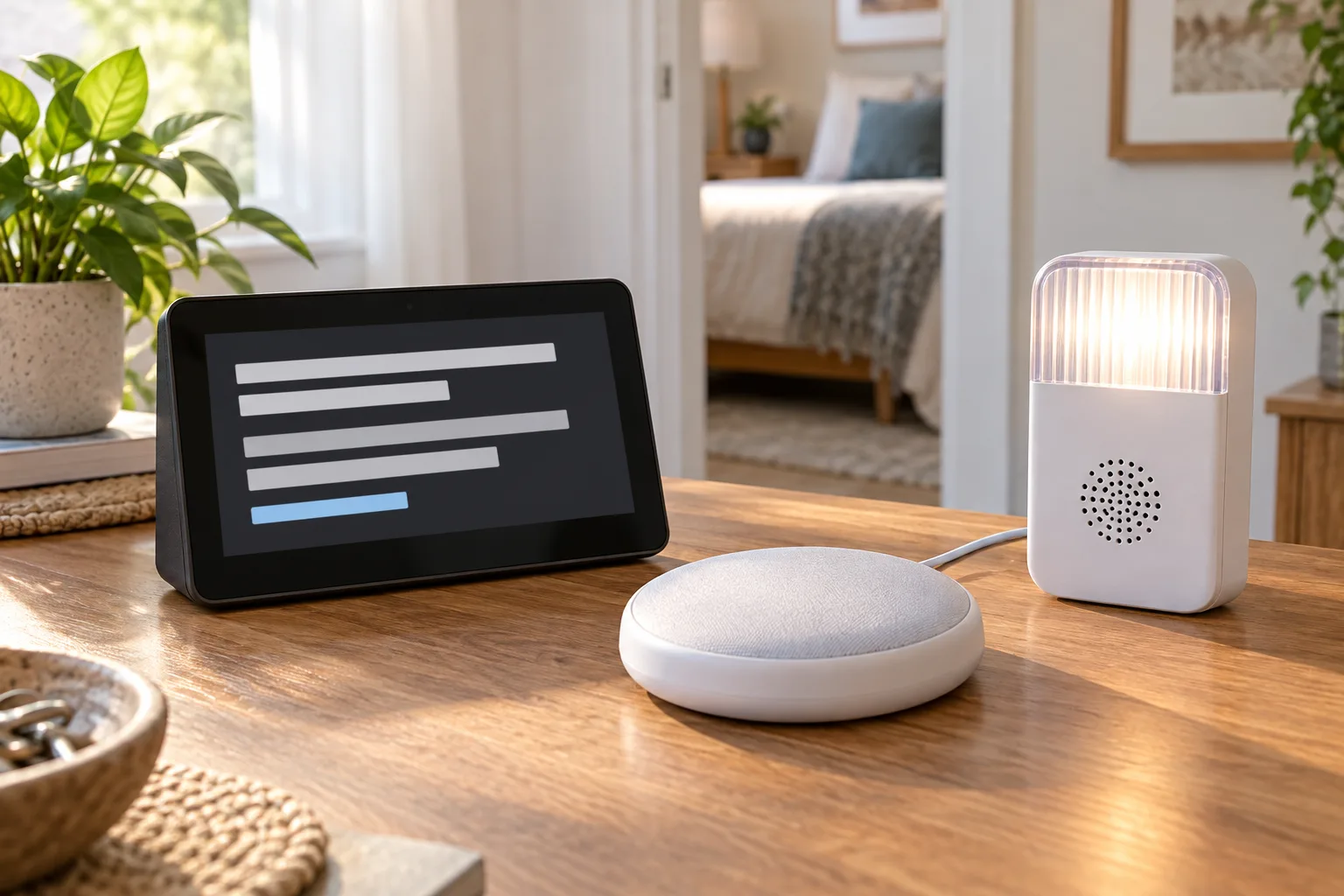
Representative view of caption and alert products
08 · Visual or tactile access

Caption and alert products

Apps, caption displays, flashing or vibrating receivers supplement sound.

Advantages
Makes spoken detail or alerts available through another sensory channel.
Limitations
Accuracy, privacy, internet, battery and safety certification vary by product.
May suit
Calls, media, meetings, doorbells and alerts when auditory access alone is unreliable.
Read the full technology guide →
Representative view of earmolds, domes and receivers
09 · Acoustic coupling

Earmolds, domes and receivers

The physical connection between the hearing aid and ear controls seal, venting, retention and output.

Advantages
Can be selected for comfort, stable gain, handling and anatomy.
Limitations
Wax, fit, venting and receiver power can limit performance or require service.
May suit
People comparing open domes, closed fittings or custom earmolds.
Read the full technology guide →
Representative view of rechargeable and zinc-air power
10 · Power systems

Rechargeable and zinc-air power

Rechargeable cases and replaceable cells support different handling and backup needs.

Advantages
Rechargeables reduce daily cell changes; disposables can be replaced immediately.
Limitations
Runtime varies with streaming and output; battery safety and charger compatibility matter.
May suit
Users planning long days, travel, dexterity support or outage backup.
Read the full technology guide →
Representative view of hearing loops and telecoils
11 · Venue access

Hearing loops and telecoils

A venue loop sends magnetic audio directly to an enabled telecoil or loaner receiver.

Advantages
No private pairing is required and many listeners can receive one signal.
Limitations
Coverage, interference, microphone routing and device compatibility need testing.
May suit
Theaters, service counters, meeting rooms and places of worship.
Read the full technology guide →
Representative view of layered emergency alerts
12 · Safety access

Layered emergency alerts

Approved audible, flashing and tactile outputs provide redundant warning paths.

Advantages
Can preserve access during sleep, noise or times when hearing devices are removed.
Limitations
Consumer phone notifications are not automatically life-safety systems.
May suit
Homes and workplaces requiring dependable multi-sensory warnings.
Read the full technology guide →
Current named examples

See how real products fit the categories

Examples are selected to teach product classification, not to rank or recommend brands. Availability and specifications were checked against manufacturer pages on October 12, 2026.

Prescription RIC hearing aid

Phonak Audéo Sphere Infinio

Rechargeable receiver-in-canal family with universal connectivity and compatibility with Phonak Roger accessories.

Check: Manufacturer performance claims do not replace individual verification or a speech-in-noise trial.

Manufacturer information →
Prescription RIC hearing aid

Oticon Intent

Rechargeable hearing-aid family using motion and acoustic sensing within its automatic processing approach.

Check: Exact phone features and fitting range depend on model, firmware and professional configuration.

Manufacturer information →
Prescription hearing-aid family

Starkey Edge AI

Available in multiple form factors with manufacturer-described sound processing, app and health-related features.

Check: Feature availability differs by style and market; compare handling and verified acoustic output first.

Manufacturer information →
Self-fitting OTC hearing aid

Sony CRE-C20

Rechargeable self-fitting OTC product intended for adults 18+ with perceived mild-to-moderate hearing loss.

Check: OTC intended use, ear-health warnings and remote-support limits must be checked before purchase.

Manufacturer information →
Cochlear implant sound processor

Cochlear Nucleus 8

Behind-the-ear external sound processor within the Cochlear Nucleus implant system and its accessory ecosystem.

Check: It is not a stand-alone hearing aid; implant compatibility, mapping and upgrade decisions belong with the implant center.

Manufacturer information →
Cochlear implant audio processor

MED-EL SONNET 3

Behind-the-ear external processor with direct-streaming support described by the manufacturer for compatible devices.

Check: Candidacy, implanted-component compatibility and programming require the treating implant team.

Manufacturer information →
A safer comparison method

Do not choose from a feature checklist alone

A representative product can explain a technology, but it cannot determine individual candidacy. Compare the exact device only after confirming ear health, hearing pattern, output needs, physical handling, connectivity, privacy, workplace or school requirements and the service available after purchase.

For hearing aids, ask how the fitting will be verified. For implants, use a specialist team. For workplace systems, trial the complete workflow—including other speakers and backup—not just the device on a quiet desk.

Explore every technology guide