Remote microphones for distance and noise
A remote microphone is placed near the person speaking and sends the signal to a receiver, hearing aid, implant processor or other listening device. It can improve the signal-to-noise ratio more directly than simply raising overall volume. Meetings, classrooms, tours and vehicles are common use cases.
Loops, telecoils and public spaces
A hearing loop creates a magnetic signal that a telecoil-equipped hearing device can receive. Loops can cover a service counter, meeting room or venue. Users need to know whether their device has an active telecoil program and how to select it. Other public systems may use FM, infrared or newer wireless approaches.
Captioning and phone access
Captions turn spoken content into text. Options include built-in video captions, live human or automated captioning, captioned telephone services and real-time transcription. Accuracy depends on audio quality, vocabulary, speakers and latency. For high-stakes meetings, confirm the appropriate service and a fallback channel.
Alerts and environmental awareness
Visual, vibrating or amplified alerts can provide access to alarms, doorbells, timers, phones and a baby’s cry. Safety-critical alarms should be selected and installed for the relevant building and code requirements rather than improvised from a consumer notification alone.
Worked workplace example
A worker can understand a colleague at a desk but misses questions from the far end of a conference room. Louder hearing-aid settings also raise room noise. A table or remote microphone places the desired speech closer to the input, while live captions provide a second channel for names and numbers. The accommodation plan may combine both and then be reviewed after real meetings.
Selection checklist
- Define the exact environment and distance.
- Confirm compatibility with current hearing devices and phones.
- Test setup time and who is responsible for it.
- Plan charging, cleaning, updates and a backup.
- Measure whether the original task became easier.
Trial the complete communication chain
Testing a microphone on a quiet desk does not show how it performs in a meeting. Trial the talker distance, room noise, connection, battery life and handoff between speakers. Confirm what the listener hears when the connection drops and whether a visual indicator makes failure obvious.
Document who owns, stores, charges and updates shared equipment. A technically effective device can fail as an accommodation if no one knows how to start it or if it is locked in another room.
Build an evidence record
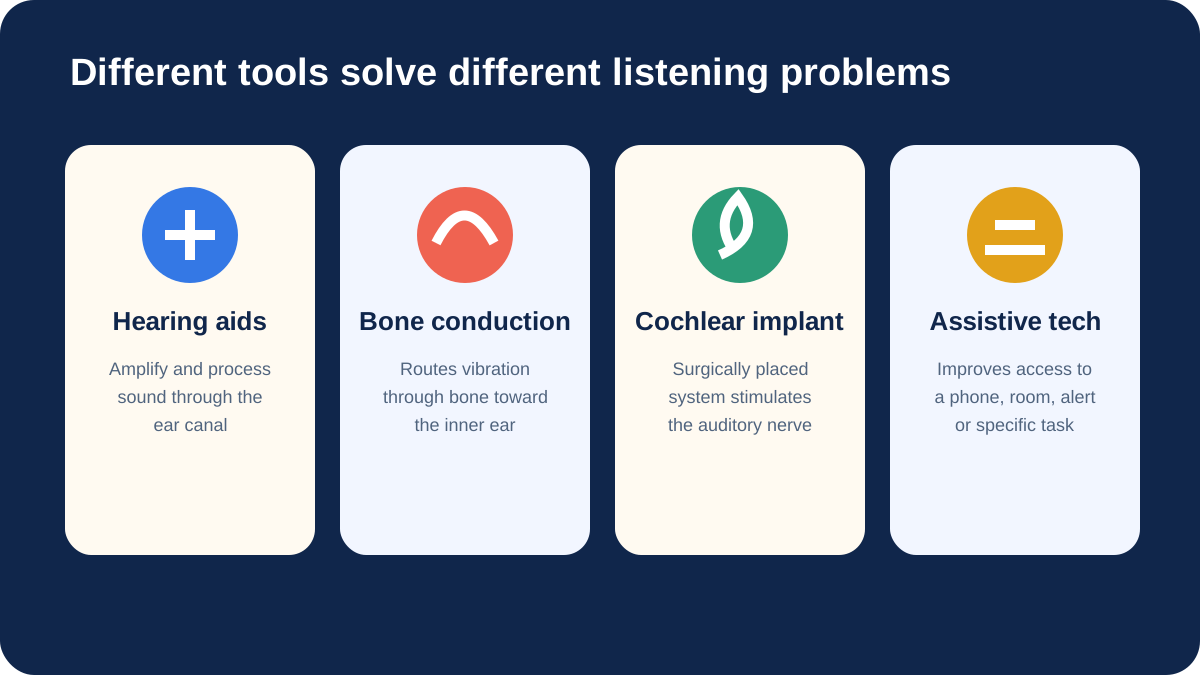
Assistive technology may move a talker’s signal, convert speech to text, route media or transform an alert. Its value depends on the barrier and complete signal path rather than whether it is labeled for hearing loss.
Write the date, ear or listening condition, equipment or service involved and the decision the evidence is meant to support. Preserve the original report or agreement rather than a cropped screenshot. When two results disagree, record the mismatch and ask what additional check would resolve it. Reliable decisions make uncertainty visible instead of silently converting it into certainty.
Worked decision
A meeting microphone helps the presenter but misses audience questions. Adding a pass-around method, captions and written action items covers failures that one device leaves behind.
This example shows why the same label can lead to different actions. The recommended next step follows the measured barrier, urgency and complete context. It does not assume that a more expensive device, a louder setting or a single test result is automatically more useful.
Prepare and verify the next step
Map source, transmitter, receiver, user interface, power, network, privacy and backup. Trial the full workflow with all speaker types.
Choose a repeatable task and define success before the change. Record distance, noise, speaker, program, comfort, handling and any failure. Repeat the task after adjustment and keep a backup communication route while evidence is incomplete or equipment is unavailable.
At follow-up, compare the result with the original goal rather than asking only whether the person “likes it.” Confirm what improved, what remained difficult, whether setup was independent and whether the solution worked for other speakers or rooms. Document maintenance, repair and retesting responsibilities so a successful trial can become dependable daily access.
Share only the information needed for the decision. A clinician may need symptoms and test history, while an employer may need the functional barrier and proposed access method rather than a complete medical record. Clear boundaries protect privacy and keep the discussion focused on the task.
Important boundary
Consumer convenience features are not automatically suitable for life safety, confidential communication or required workplace access.
Seek prompt professional care for sudden hearing change, severe pain, drainage, acute dizziness, neurologic symptoms or a retained object. Product features, policies and official guidance can change; verify current instructions and primary sources when the decision affects health, safety, money or legal rights.
Sources and review notes
Sources were checked for this editorial update on September 26, 2026. External guidance can change; follow the linked source for the current version.
This page provides education, not an individual diagnosis, treatment plan, legal opinion or billing decision. Historical expert contribution is credited only where supported by the original project record; it does not imply review of this update.