Understand the exposure
Risk depends on sound level, duration and repetition. Impulse noise requires special attention. Workplace programs may use dosimetry or sound-level measurements under applicable standards. A consumer phone reading can illustrate change but should not be treated as certified exposure evidence.
Earplugs and earmuffs
Foam plugs can provide substantial attenuation when correctly rolled and inserted. Premolded or custom plugs may improve repeatability for some users. Earmuffs are easy to inspect but can lose seal around glasses, hair or equipment. Dual protection may be required in particular environments.
Fit is the product
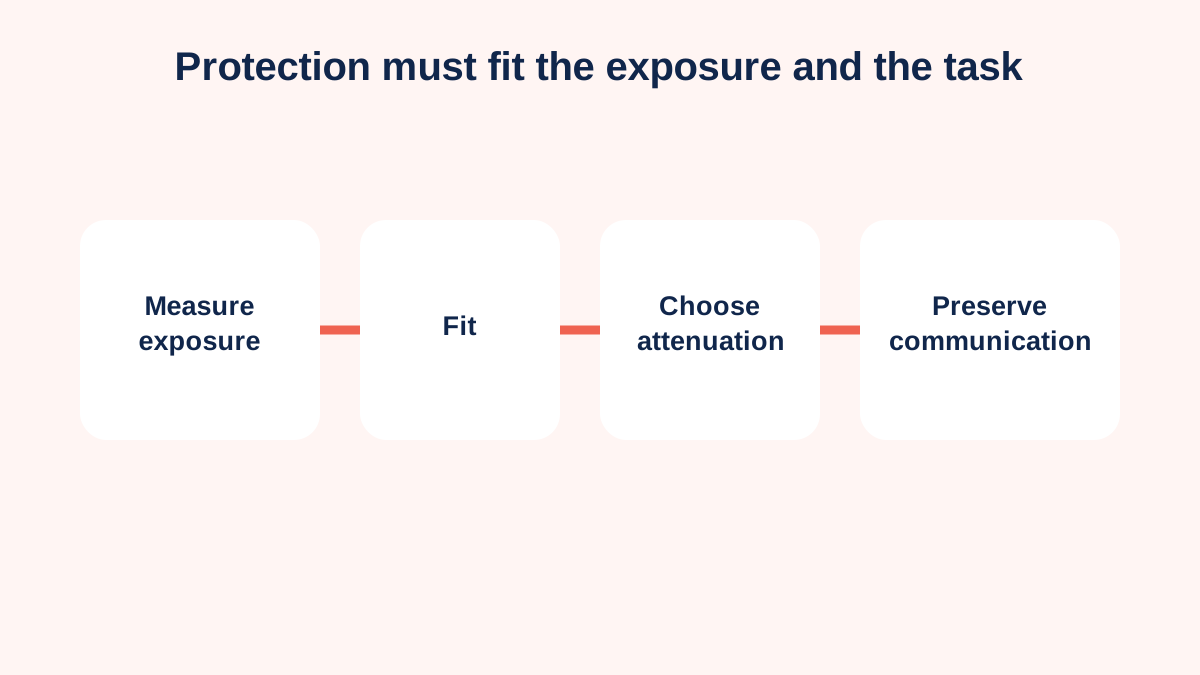
The package rating is measured under defined laboratory conditions. Individual fit can differ greatly. Training and fit testing help show whether the selected protector achieves an appropriate result. Discomfort, poor insertion and seal breaks often explain why nominally strong protection performs poorly.
Communication and situational awareness
Level-dependent protectors, communication headsets and integrated systems may support speech or radio use while managing hazardous sound. They still require evaluation for the actual noise, communication channel and safety signals. Removing protection to hear instructions defeats the plan.
A workplace example
A worker uses high-rated plugs but repeatedly removes them for radio calls. The solution evaluates a compatible protected communication system, verifies attenuation and retrains the team’s call procedure. The goal is continuous protection plus effective communication, not simply a larger rating.
When hearing devices are involved
Ordinary hearing aids are not automatically hearing protectors. Some specialized devices have approved protection functions, but use must follow the workplace program and product documentation. Discuss tinnitus, discomfort, drainage or changing hearing with an appropriate professional. Protection preserves remaining hearing; it does not reverse existing loss.
Musicians and recreational sound
Music-oriented plugs aim for a more even frequency reduction than basic foam plugs, which can make music sound muffled. Custom and filtered options may improve consistency, but fit and the selected filter still determine protection. Stage monitors and headphones add separate exposure that should be included in the plan.
At concerts, distance from speakers, breaks and total duration matter. Ringing or muffled hearing afterward is a warning that exposure was excessive, not proof of a harmless temporary effect. Persistent or sudden symptoms warrant professional evaluation.
Review the protection program
A workplace program should connect exposure assessment, engineering controls, administrative controls, protector selection, fit, training and hearing monitoring. Personal protective equipment is not the first or only control when noise can be reduced at the source. Workers need a way to report discomfort and communication problems without being told simply to remove protection.
Reassess after equipment, shift length, job task, hearing status or communication systems change. The best protector is one that supplies appropriate attenuation, remains properly worn and supports the safety communication required for the job.
Children, tools and household noise
Power tools, shooting, fireworks, motors and amplified recreation can create hazardous sound outside formal workplaces. Children need correctly sized protection and adult supervision; ordinary music headphones are not hearing protectors. Keep protectors accessible near the activity so convenience does not defeat use.
For shooting or impulse noise, obtain specialized guidance and consider both plugs and muffs where appropriate. Electronic level-dependent protectors can support communication while limiting high-level sound, but their certification, fit and battery state still matter.
Signs the plan needs revision
Protection that constantly loosens, causes pain, interferes with other safety equipment or must be removed to communicate is not an adequate final plan. Neither is a system so isolating that required alarms and instructions become inaccessible. Report these conflicts through the safety process and compare better-fitting or integrated options.
Hearing monitoring can reveal change, but it does not replace exposure control. Keep training, fit-testing and equipment records so recurring failures can be corrected.
Plan for alarms and emergency communication
Before entering a protected area, identify which alarms, vehicle movements, radio calls or verbal instructions must remain detectable. The safety team should evaluate those signals together with required attenuation; an employee should not be asked to choose between hearing protection and an essential warning. Visual, vibrating or integrated communication systems may be necessary, depending on the setting. Test them under operating noise and with all other protective equipment in place. Include evacuation, power loss and equipment failure. Record the accepted configuration and train supervisors and coworkers in the communication procedure. Recheck it after machinery, alarm patterns, job assignments or personal protective equipment changes.
Sources and review notes
Sources were checked for this editorial update on October 12, 2026. External guidance can change; follow the linked source for the current version.
This page provides education, not an individual diagnosis, treatment plan, legal opinion or billing decision. Historical expert contribution is credited only where supported by the original project record; it does not imply review of this update.