Start with candidacy, not price
An OTC device can be a practical route for an adult with a straightforward, perceived mild-to-moderate difficulty who is comfortable following setup instructions. It is not a substitute for evaluating sudden change, ear pain, drainage, marked dizziness, a large difference between ears or another medical concern. Children are not OTC candidates.
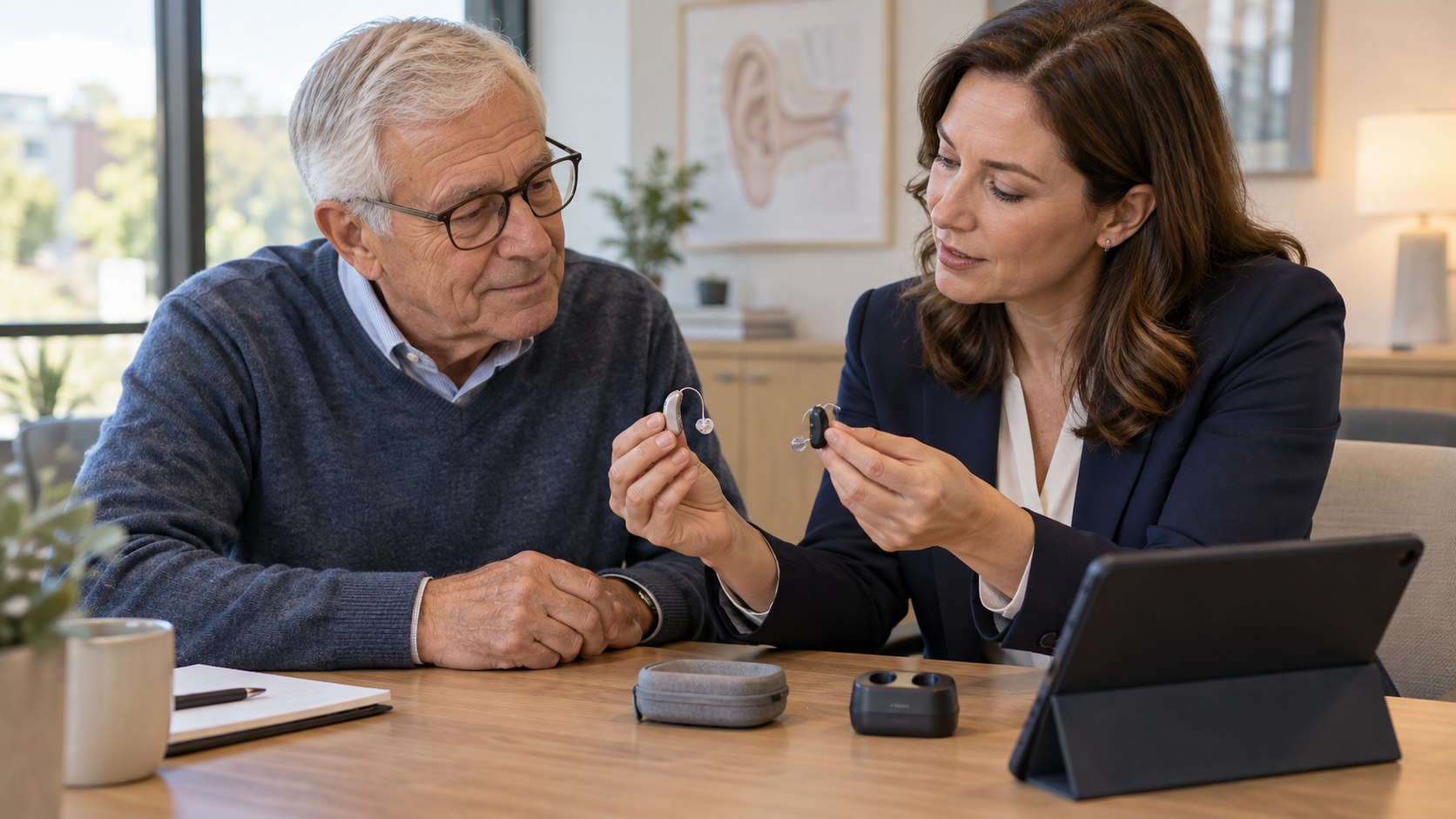
Prescription hearing aids are selected and fitted through a licensed professional. That pathway can address more hearing-loss configurations, ear-health questions, earmolds, high-power needs, verification and ongoing adjustments. The useful question is which support model matches the person, not which label sounds more advanced.
Compare the complete service package
Record the device price, return window, nonrefundable fees, warranty, loss coverage, remote or in-person support, repair process and included accessories. An apparently inexpensive option can become frustrating if the user cannot achieve a stable fit or understand the app. A bundled clinic price may be worthwhile when it includes verification and follow-up that the person will actually use.
Fitting and verification
Self-fitting systems may use an in-app hearing screen and user adjustments. Professional fittings can incorporate a full diagnostic evaluation and probe-microphone or real-ear verification. Neither route guarantees success. Benefit should be judged in specific situations such as a family meal, a weekly meeting and a phone call, not only by whether sounds seem louder.
Worked comparison
One adult has gradual difficulty in restaurants, no warning symptoms and confidence using a smartphone. A well-supported OTC trial may be reasonable. Another adult reports a sudden left-ear change and persistent unilateral tinnitus. Shopping for amplification first would miss the more important next step: prompt professional evaluation.
Questions before paying
- Who is the intended user and what hearing range is supported?
- How is fit verified and who helps if speech remains unclear?
- What starts the trial clock and which fees are refundable?
- Can the device connect to the user’s phone and needed accessories?
- What is the repair and replacement route?
Support is part of the product
Two devices with similar headline features can create very different experiences because fitting and support are delivered differently. Some OTC sellers provide only written help, while others include video appointments or remote adjustments. Prescription packages may bundle several years of appointments, or charge separately for each visit. Ask who answers a fitting problem, how quickly help is available, whether replacement parts are stocked and whether support remains available if the retailer changes ownership.
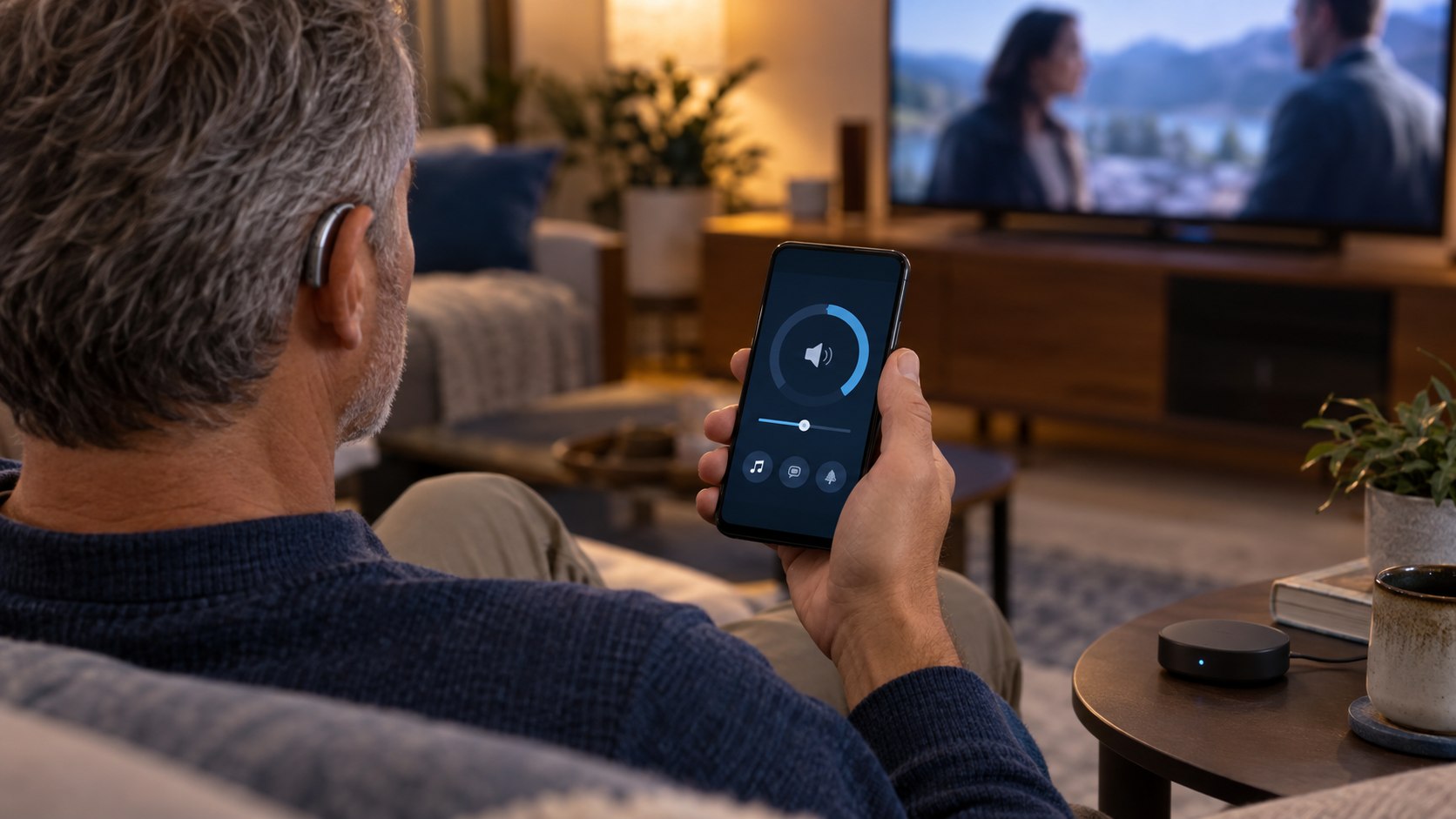
Also separate convenience features from hearing benefit. Rechargeability, app control and streaming may make a device easier to use, but they do not prove that speech will be audible or comfortable. Conversely, a basic device that is well fitted and consistently worn may be more useful than a premium product whose app, domes or controls do not fit the person’s routine.
Run a structured trial
Choose three repeatable situations before purchase: for example a quiet conversation, a restaurant meal and a weekly video call. Record what is missed, the listening effort and any comfort problem. During the trial, change one variable at a time—fit, program, microphone accessory or environment—so improvement can be attributed to something concrete. Keep packaging, receipts, serial numbers and written return terms.
A trial has failed when the device cannot be worn reliably, necessary speech remains inaccessible after appropriate adjustment, essential connections do not work or the support route cannot resolve a recurring problem. It has not necessarily failed because amplified sound initially feels unfamiliar. Adaptation, verification and targeted adjustments may be appropriate, but the return deadline must not be allowed to expire while waiting indefinitely.
When professional input changes the decision
A professional evaluation is particularly useful when hearing differs sharply between ears, speech understanding is unexpectedly poor, ears cannot tolerate standard tips, communication demands are unusually high or earlier devices have repeatedly failed. It can identify whether a different physical fit, stronger output, assistive microphone or medical referral should be considered. The value is not merely access to a prescription product; it is the ability to connect measurements, verification and follow-up to the user’s reported problems.
For a straightforward OTC trial, professional help can still be added later. Keep the audiogram and product information, and bring the device to an appointment if the clinician is willing to evaluate it. Before purchase, check whether the seller accepts returns after professional advice and whether remote support can implement recommended changes. A pathway should leave room to escalate when self-management does not solve the task.
Sources and review notes
Sources were checked for this editorial update on October 12, 2026. External guidance can change; follow the linked source for the current version.
This page provides education, not an individual diagnosis, treatment plan, legal opinion or billing decision. Historical expert contribution is credited only where supported by the original project record; it does not imply review of this update.