Behind the ear: BTE and RIC
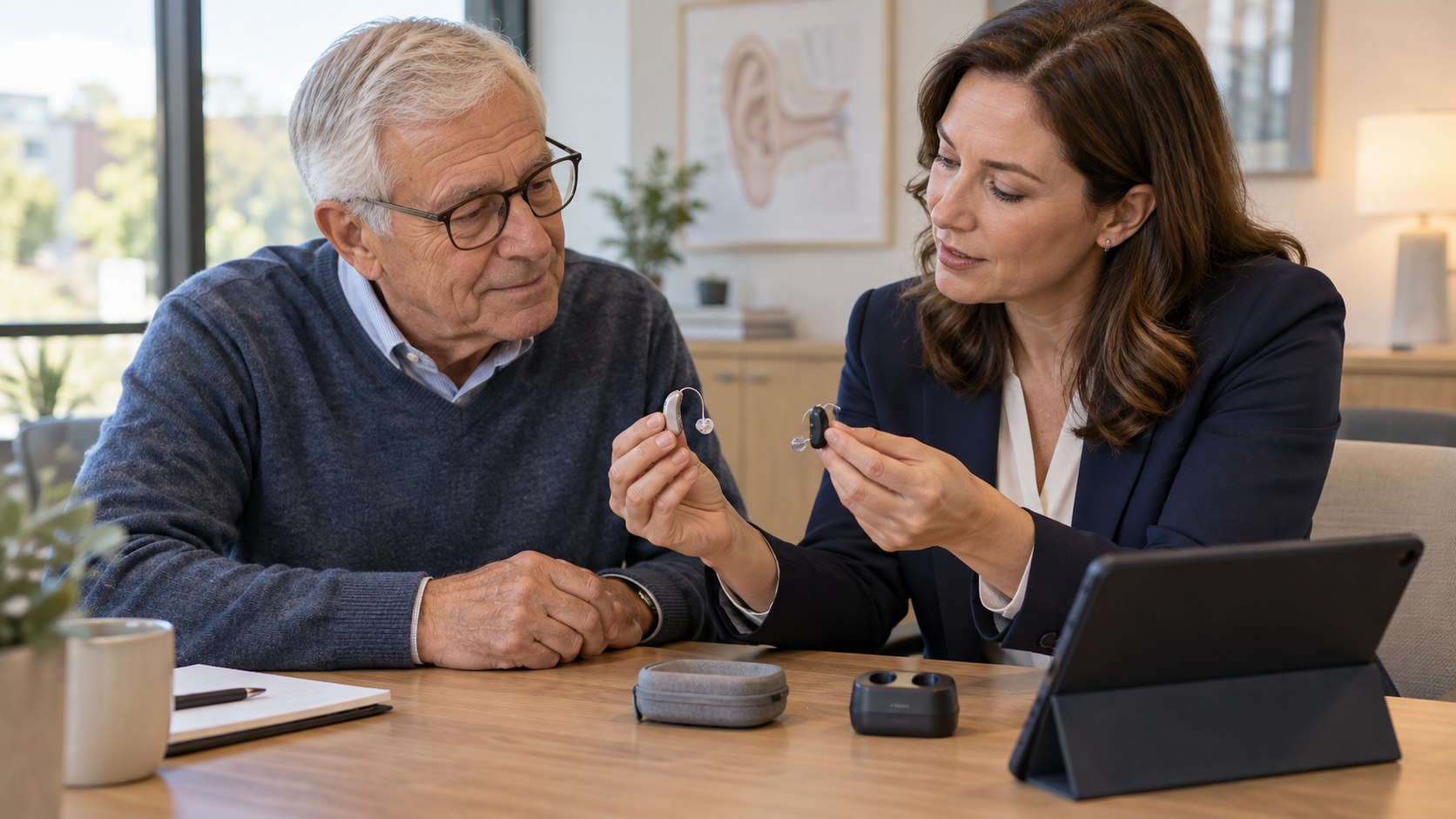
A behind-the-ear device sends sound through tubing to an earmold or dome. A receiver-in-canal device places the receiver in the ear canal and connects it to a case behind the ear. These formats can provide room for rechargeable batteries, controls, directional microphones and wireless hardware. Receiver and dome choices also affect sound and comfort.
In the ear: ITE through IIC
Custom in-the-ear devices fill more of the outer ear, while in-the-canal, completely-in-canal and invisible-in-canal designs become progressively smaller. Discretion may improve, but tiny batteries, limited controls, wax exposure and handling can become more important. Some wireless features may be unavailable in the smallest formats.
Fit, power and daily handling
Consider the amount and configuration of hearing loss, ear-canal shape, feedback risk, vision, finger dexterity, moisture, telephone use and how often filters or domes need replacement. A style that looks appealing but cannot be inserted, charged or cleaned reliably is not a practical match.
Worked scenario
A person with arthritis wants an almost invisible device but struggles with small batteries and wax guards. A rechargeable RIC with a larger case and simple charger may be easier to manage. Another person who regularly removes glasses and protective equipment may prefer to trial a custom in-ear style. The tradeoff becomes concrete only in the real routine.
What to trial
Practice insertion, removal, charging, phone calls, volume changes and cleaning before the return period ends. Wear the device with glasses, masks, headgear or workplace equipment. Ask whether changing the dome, earmold, vent or receiver would improve comfort or feedback before abandoning an otherwise useful device.
Style changes acoustic choices
The earpiece can leave the canal relatively open or seal it more fully. An open fitting may feel natural for low-frequency hearing and reduce the plugged-up sensation of one’s own voice, but it can limit low-frequency amplification and allow environmental sound to enter directly. A more closed dome or earmold can provide additional acoustic control and power, while increasing the need to manage occlusion and moisture. The appropriate choice depends on the audiogram, feedback margin and comfort—not on a universal preference.
Microphone placement also matters. Behind-the-ear styles can provide physical separation between microphones and receivers and room for directional arrays. In-ear microphones can benefit from some natural outer-ear effects. These are design considerations, not guarantees; verification and a real-world trial show whether the complete fitting supports the user’s goals.
Maintenance and ownership test
Before choosing a style, ask the user to perform the complete weekly routine with demonstration parts: insert and remove the device, identify left and right, open the charger, replace a wax guard or dome, clean microphone openings and connect the phone. Observe whether the controls are visible and whether the person can recover from a connection failure without starting over.
Ask which components are replaceable, which require a clinic or mail-in repair and how long a loaner takes. Custom shells can require remake appointments if the fit changes. Receiver wires and domes are common service items for RIC devices. Small canal instruments encounter wax and moisture close to the electronics. A style decision is stronger when these ordinary ownership tasks are considered alongside appearance.
Do not let the style name hide the fitting
Two RIC devices can behave differently because of receiver strength, dome or earmold, venting, programming and microphone algorithms. Two custom canal devices can differ in depth, shell shape and available wireless hardware. Compare the complete fitting rather than treating the three-letter style label as a performance score.
Photograph or record the exact trial configuration: device model, receiver, earpiece, vent and program. If comfort or sound changes after a service visit, this record helps identify what changed. At the end of a trial, the person should be able to wear the device for the intended schedule, manage it independently or with planned support, and understand the repair route.
Decision summary
Shortlist more than one viable style and compare them under the same listening and handling tasks. The right result is not the smallest case; it is a fitting the user can wear, maintain and obtain support for while meeting the required hearing goals.
Sources and review notes
Sources were checked for this editorial update on October 12, 2026. External guidance can change; follow the linked source for the current version.
This page provides education, not an individual diagnosis, treatment plan, legal opinion or billing decision. Historical expert contribution is credited only where supported by the original project record; it does not imply review of this update.