Why the ear canal changes the fitting
Manufacturers can provide a first-fit setting, but ear canals differ in length, volume and resonance. Domes, earmolds, vents and receiver placement also change the sound reaching the eardrum. A setting that looks correct in programming software may not match the prescribed response in the actual ear.
Probe-microphone measurement observes that individual result rather than assuming an average ear.
What happens during verification
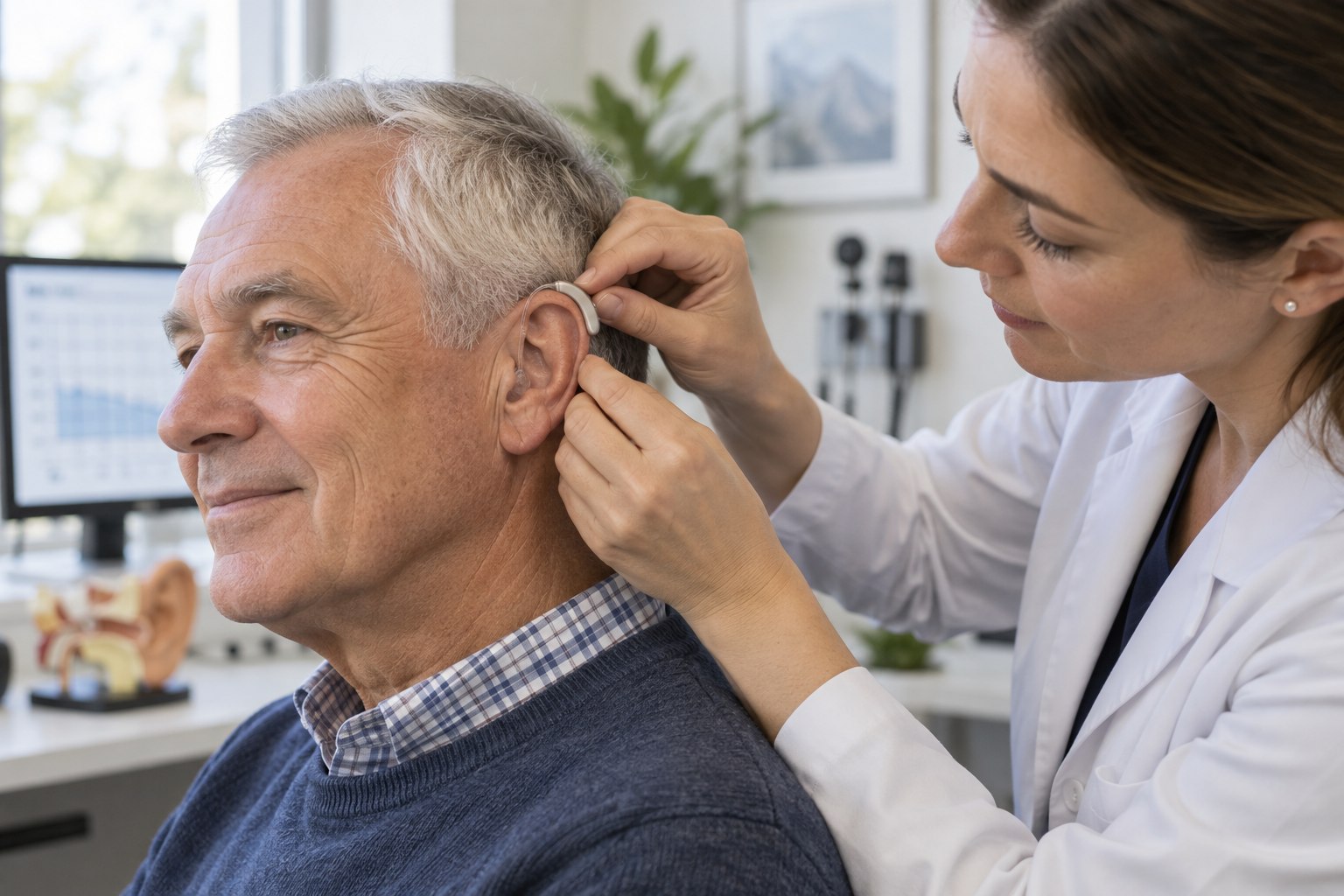
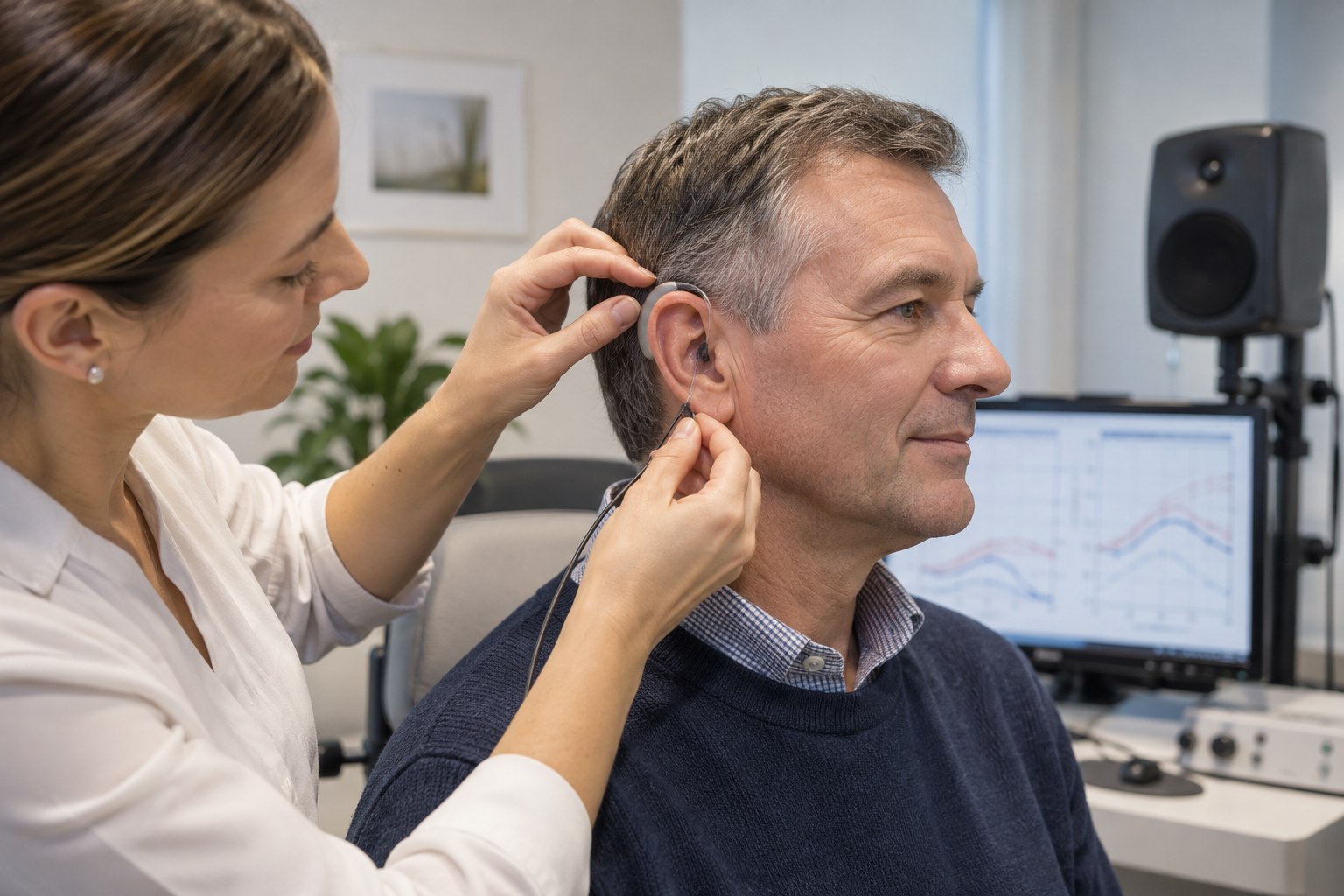
The clinician inspects the ear, places a thin probe tube to a controlled depth and positions the hearing aid without dislodging it. A calibrated speaker presents speech-like signals while the system measures the aided response. The clinician can compare soft, average and loud inputs with selected targets and maximum-output limits.
The procedure should be comfortable. Tell the clinician about pain, recent surgery or unusual ear conditions before placement.
Targets are not arbitrary
Evidence-based prescriptive methods use the audiogram and other fitting parameters to estimate useful frequency-specific gain and output. The chosen rationale, experience level, coupling and device limits affect the result. Matching a target is a starting point for access, not a requirement to ignore comfort or a person’s goals.
If a target cannot be met, the record should help explain whether feedback, receiver power, coupling or another limit is responsible.
Verification and validation are different
Verification asks whether the device produces the intended acoustic result. Validation asks whether the person experiences useful benefit and meets communication goals. Speech testing, questionnaires, diaries and structured trials can add validation. A person may have excellent target matching and still need changes for handling, sound quality or a specific workplace task.
Conversely, initial preference for a very soft fitting does not prove that speech cues are adequately audible.
A practical fitting example
A user reports that speech sounds loud but consonants remain indistinct. Measurement shows adequate low-frequency output but reduced high-frequency access because the open coupling and feedback limit constrain gain. The clinician discusses coupling, receiver capacity, feedback management and realistic limits rather than repeatedly raising overall volume.
A remote microphone might address distance and noise even after the hearing aid itself is well verified.
What to ask and keep
- Was probe-microphone verification completed for each ear?
- Which prescription and input levels were used?
- Were maximum output and comfort considered?
- Where did the fitting differ from target, and why?
- How will benefit be validated in my priority situations?
Ask for a copy or summary of the verification result and current settings. Future repairs or replacements are easier to evaluate when the baseline is documented.
Special fitting situations
Open fittings, severe high-frequency loss, unusual ear-canal acoustics and frequency-lowering features can make verification more complex. The clinician may need careful probe placement, stored equalization, speech mapping or feature-specific procedures. Pediatric fittings often use measured or age-appropriate estimates of the child’s ear acoustics because a child’s ear canal changes as it grows. Implantable and bone-conduction systems use different verification approaches; the ordinary hearing-aid process should not be copied without adjustment.
Visible target mismatch does not always mean careless work. Comfort limits, feedback, device bandwidth or medical restrictions may prevent a complete match. What matters is that the difference is recognized, explained and connected to alternatives rather than hidden.
After the measurement
Use the verified fitting in daily life and keep a short, specific log. “Too loud” is less actionable than “cutlery is sharp at dinner, but speech from across the table remains unclear.” Note the environment, speaker distance, program, accessory and whether the problem is loudness, clarity, localization or handling. Follow-up can then preserve verified audibility while addressing the actual complaint.
Reverification may be useful after a major programming change, receiver or earmold replacement, coupling change, repair or significant hearing change. Ask whether automatic features were active during measurement and how manual programs differ. Keep the fitting report with purchase, warranty and trial-period documents. Verification is most valuable when it becomes a reproducible baseline rather than a one-time screen the user never sees.
If two programs are intended for different environments, ask how their measured outputs differ and which control changes are safe to make at home. Bring the paired phone and accessories to follow-up so streaming and microphone routes can be checked as part of the complete system.
Sources and review notes
Sources were checked for this editorial update on October 12, 2026. External guidance can change; follow the linked source for the current version.
This page provides education, not an individual diagnosis, treatment plan, legal opinion or billing decision. Historical expert contribution is credited only where supported by the original project record; it does not imply review of this update.