Read the page in the right order
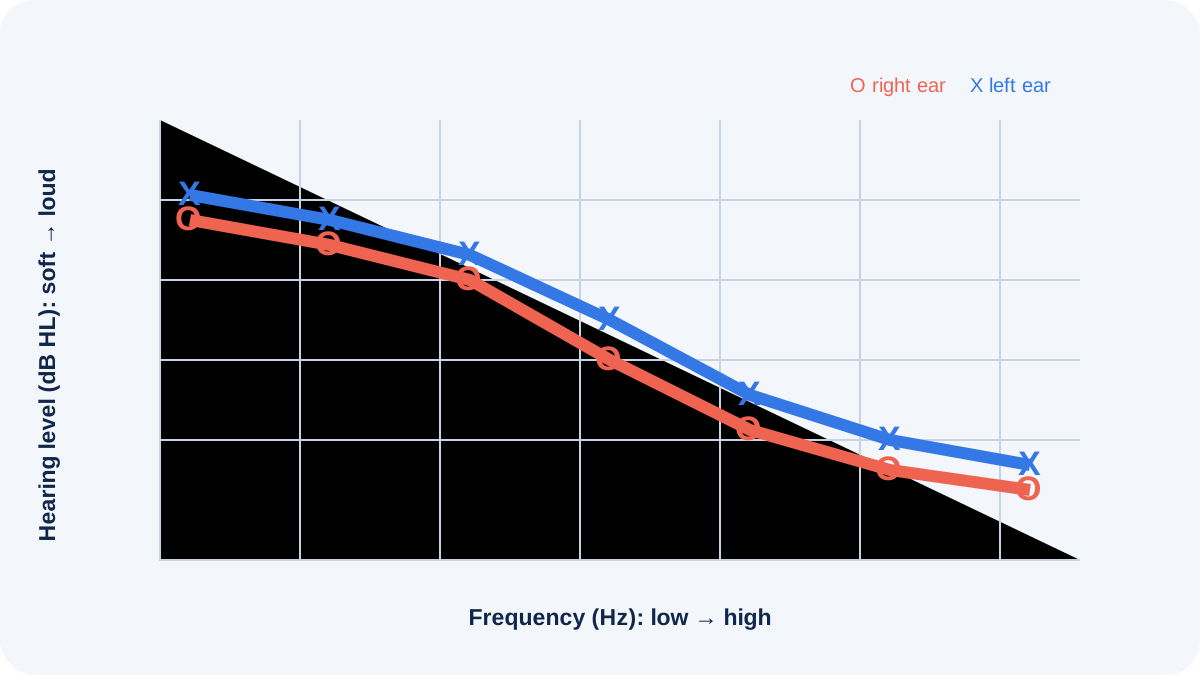
First confirm which symbols represent the right and left ear and whether they are air- or bone-conduction thresholds. Next look for asymmetry, the overall configuration and any air–bone gaps. Only then consider labels such as mild or moderate. Symbol conventions can change when masking is used, so use the legend on the actual report.
Frequency and hearing level
Frequency is measured in hertz. Lower frequencies contribute much of the energy and rhythm of speech; many consonant cues extend into higher frequencies. Hearing level is plotted in dB HL, a clinical reference scale. A point lower on the page means a louder signal was needed for a response at that frequency.
Air, bone and type of loss
Air-conduction testing includes the outer, middle and inner ear. Bone conduction largely bypasses the outer and middle ear. A meaningful gap between air and bone results can support a conductive component. When air and bone results are similarly reduced, the pattern can support a sensorineural component. A mixed pattern can include both. The clinician must decide whether differences are significant and reliable.
Why an average is not the whole result
A pure-tone average usually combines selected speech-range frequencies. It is useful for consistency checks and summary, but two people with the same average can have different high-frequency access, speech scores and real-world needs. A steeply sloping result may produce more difficulty with clarity than the average suggests.
Worked example
Suppose the right and left ears are similar through 1,000 Hz, then both slope downward at higher frequencies. The person reports that voices are audible but words blur in a busy room. That complaint is consistent with missing high-frequency detail, but the audiogram still cannot predict every listening situation. Speech testing, history, technology fit and communication strategies complete the picture.
What to ask next
- Are the results reliable and similar between ears?
- Is there an air–bone gap or another reason for medical referral?
- What do speech scores add?
- Which frequencies explain my most important communication problem?
- How will we measure benefit after an intervention?
Speech results, reliability and change over time
An audiogram should be read alongside the test conditions and the clinician’s judgment about reliability. Responses can be affected by attention, instructions, earphone placement, background noise and whether masking was needed. Small differences between tests do not always represent a real change. Ask which shifts are clinically meaningful and whether the same test method was used.
Speech measures answer different questions from pure tones. A speech threshold can help check agreement with the audiogram, while word-recognition results describe performance for a particular material and presentation level. They are not a universal percentage of how much speech someone understands in daily life. When monitoring change, keep copies of the complete reports rather than only the summary label.
Build an evidence record
Start with frequency, hearing level, ear and transducer symbols. Then examine configuration, air–bone relationships, asymmetry, no-response arrows, masking and reliability. A pure-tone average is a summary for a defined purpose, not a percentage of hearing.
Write the date, ear or listening condition, equipment or service involved and the decision the evidence is meant to support. Preserve the original report or agreement rather than a cropped screenshot. When two results disagree, record the mismatch and ask what additional check would resolve it. Reliable decisions make uncertainty visible instead of silently converting it into certainty.
Worked decision
Two people share the same three-frequency average. One has a flat mild pattern; the other has near-typical low frequencies and a steep high-frequency reduction. Their consonant access, fitting needs and complaints can be quite different.
This example shows why the same label can lead to different actions. The recommended next step follows the measured barrier, urgency and complete context. It does not assume that a more expensive device, a louder setting or a single test result is automatically more useful.
Prepare and verify the next step
Compare original graphs rather than verbal labels, use the same frequencies and ears across dates and note method changes. Connect the graph to speech results and repeatable communication tasks.
Choose a repeatable task and define success before the change. Record distance, noise, speaker, program, comfort, handling and any failure. Repeat the task after adjustment and keep a backup communication route while evidence is incomplete or equipment is unavailable.
At follow-up, compare the result with the original goal rather than asking only whether the person “likes it.” Confirm what improved, what remained difficult, whether setup was independent and whether the solution worked for other speakers or rooms. Document maintenance, repair and retesting responsibilities so a successful trial can become dependable daily access.
Share only the information needed for the decision. A clinician may need symptoms and test history, while an employer may need the functional barrier and proposed access method rather than a complete medical record. Clear boundaries protect privacy and keep the discussion focused on the task.
Important boundary
An audiogram describes threshold responses under test conditions; it does not show listening effort, every real-world speech outcome or the cause by itself.
Seek prompt professional care for sudden hearing change, severe pain, drainage, acute dizziness, neurologic symptoms or a retained object. Product features, policies and official guidance can change; verify current instructions and primary sources when the decision affects health, safety, money or legal rights.
Sources and review notes
Sources were checked for this editorial update on September 26, 2026. External guidance can change; follow the linked source for the current version.
This page provides education, not an individual diagnosis, treatment plan, legal opinion or billing decision. Historical expert contribution is credited only where supported by the original project record; it does not imply review of this update.