When the pathway may be discussed
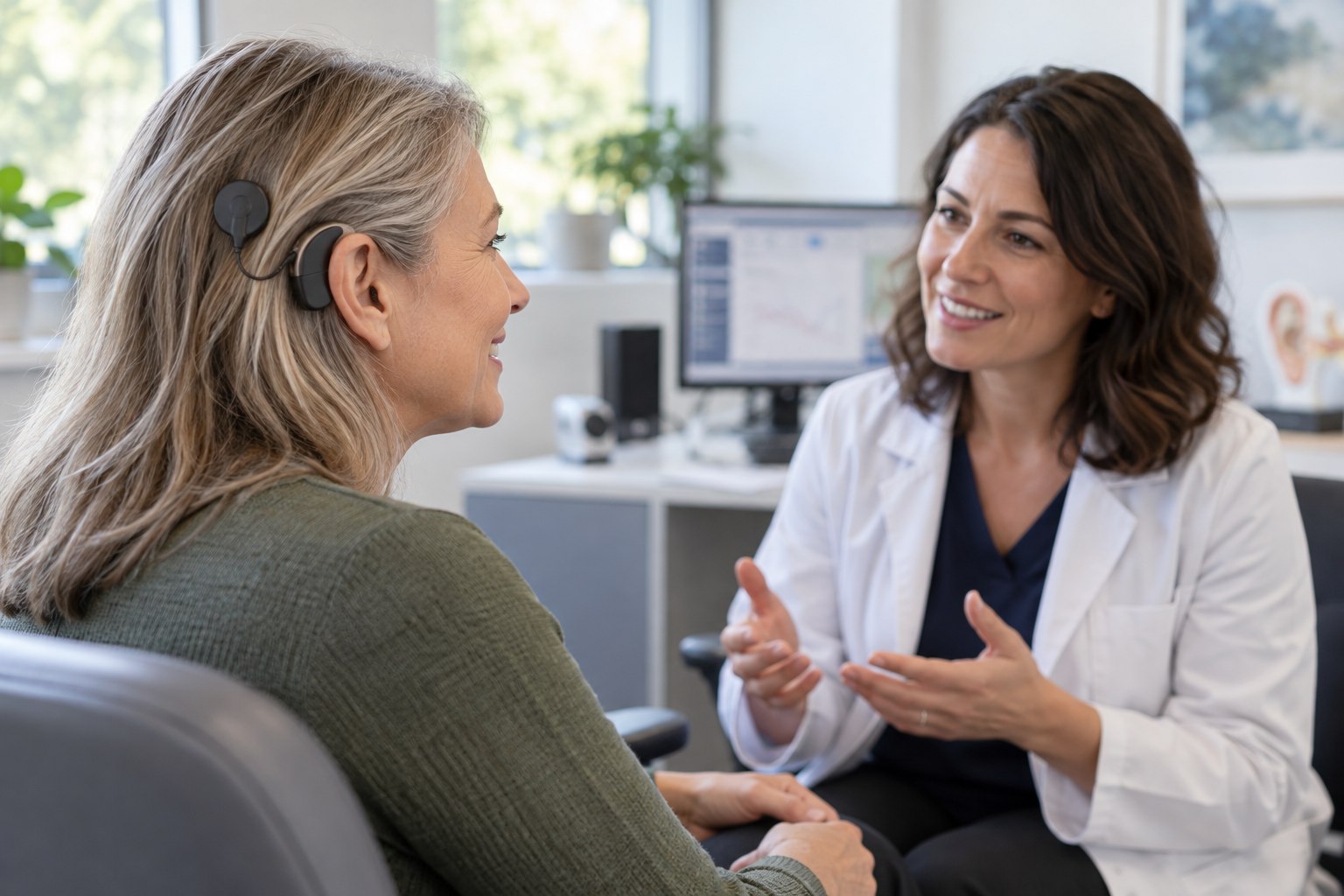
Bone-conduction options may be considered for particular conductive or mixed losses, chronic outer- or middle-ear conditions, ear-canal intolerance or some one-sided hearing situations. These categories do not establish candidacy. Bone-conduction thresholds, speech testing, ear health, anatomy and expected benefit from conventional options must be examined.
Nonsurgical wearing options
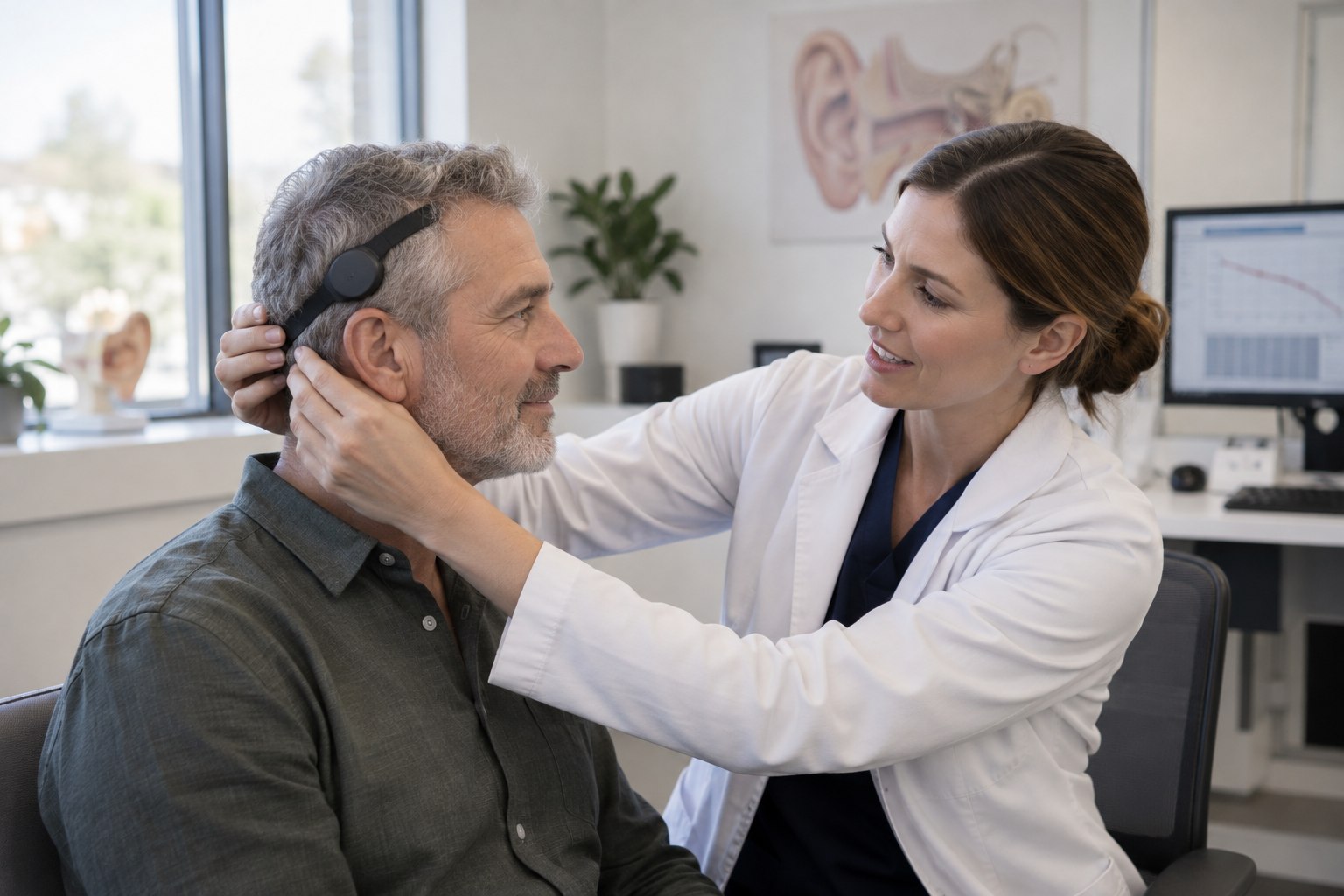
A processor can be held against the skull with a softband, rigid band or other coupling system; some products use an adhesive attachment. Pressure, retention, hair, skin comfort, activity and appearance affect daily use. A clinic demonstration should be tested for enough time to reveal soreness, movement and real-world speech access.
Implanted system differences
Implanted systems can use a skin-penetrating abutment or a magnetic/transcutaneous connection, depending on the device. The signal path, available power, skin care and surgical tradeoffs differ. Ask about healing, wound or skin management, processor retention, impact precautions and current MRI conditions for the exact implant.
Worked trial
A person with recurring ear-canal problems cannot wear an earmold comfortably. A band demonstration improves access in quiet, but slips during physical work. The evaluation compares retention options, required output, workplace head protection and whether an implanted route offers enough benefit to justify surgery.
Measure the actual goal
Test speech, comfort and handling in the relevant environment. For one-sided routing, include speech and noise from both directions; improved awareness on one side does not recreate ordinary two-ear localization. For conductive loss, compare with a well-fitted air-conduction device when medically and practically possible.
Long-term ownership
Ask who provides programming, repairs and loaners; what external processors and accessories cost; and how upgrades are supported. For an implant, retain the implant card and safety information. Plan around school, employment, sport and travel. A product is only useful when its medical pathway, wearing method and service network remain workable.
Coupling determines usable output
A processor pressed against skin through a band loses some energy compared with a direct connection, and magnetic systems transmit through skin differently from an abutment. Required power, skin thickness, comfort and retention influence which pathway can deliver adequate output. Published maximum-output specifications do not replace aided testing on the individual.
Ask the clinician to explain which cochlea receives the vibration in a one-sided condition and what binaural limitations remain. Trial speech from the poorer side and noise from the better side, then reverse them. This directional evidence is more informative than a single quiet-room impression.
Skin, activity and daily life
Headbands and adhesive systems can create pressure or skin irritation. Implanted connections require their own site care and monitoring. Helmets, hats, sleep position, sports and perspiration may affect retention. Discuss impact restrictions and waterproof accessories for the exact system.
For a child, school staff need instructions for retention, microphone connection, charging and identifying a silent processor. For an adult worker, protective equipment and communication radios should be trialed together. A good clinic result can still fail if the wearing system conflicts with daily activity.
Prepare a side-by-side trial record
List the coupling method, processor, programmed settings and wearing position for each demonstration. Test quiet speech, background noise, talkers on each side, comfort after extended wear, retention during movement and interaction with glasses or protective equipment. Record benefit and problems separately; “sounds louder” does not describe whether speech or awareness improved.
Ask whether the nonsurgical demonstration underestimates or differently represents an implanted result, and how the team predicts the change. Discuss alternatives, including conventional air-conduction hearing aids, CROS/BiCROS, remote microphones and communication strategies. The best recommendation should explain why its pathway fits both the hearing findings and daily use.
Questions about surgery and support
For an implanted option, ask about surgical risks, skin care, healing, processor activation, MRI conditions, impact precautions and what happens if the external processor is lost. Confirm mapping access, loaner availability and typical repair routes. Insurance coverage for surgery does not automatically describe future accessories or upgrades. Keep long-term service costs visible during the decision.
Document the recommendation
Ask for a written summary that names the hearing condition being addressed, the alternatives considered, the demonstration configuration and the expected functional benefit. It should distinguish sound awareness, speech access and localization rather than combining them as “better hearing.” Record which side was tested and whether the better cochlea received the routed signal. If surgery is proposed, the summary should also separate the likely acoustic benefit from surgical and long-term service considerations. Take time to compare the written goals with the activities that matter at home, work or school. A later follow-up can then assess the same goals under comparable conditions and identify whether programming, coupling, training or a different support route needs attention.
Sources and review notes
Sources were checked for this editorial update on October 12, 2026. External guidance can change; follow the linked source for the current version.
This page provides education, not an individual diagnosis, treatment plan, legal opinion or billing decision. Historical expert contribution is credited only where supported by the original project record; it does not imply review of this update.