Common mechanisms
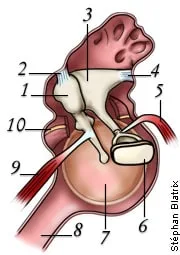
Examples include ear-canal blockage, middle-ear fluid, a perforated eardrum, pressure problems, fixation or interruption of the ossicles and structural differences present from birth. The likely cause changes with age, symptoms, otoscopy and test results.
What testing may show
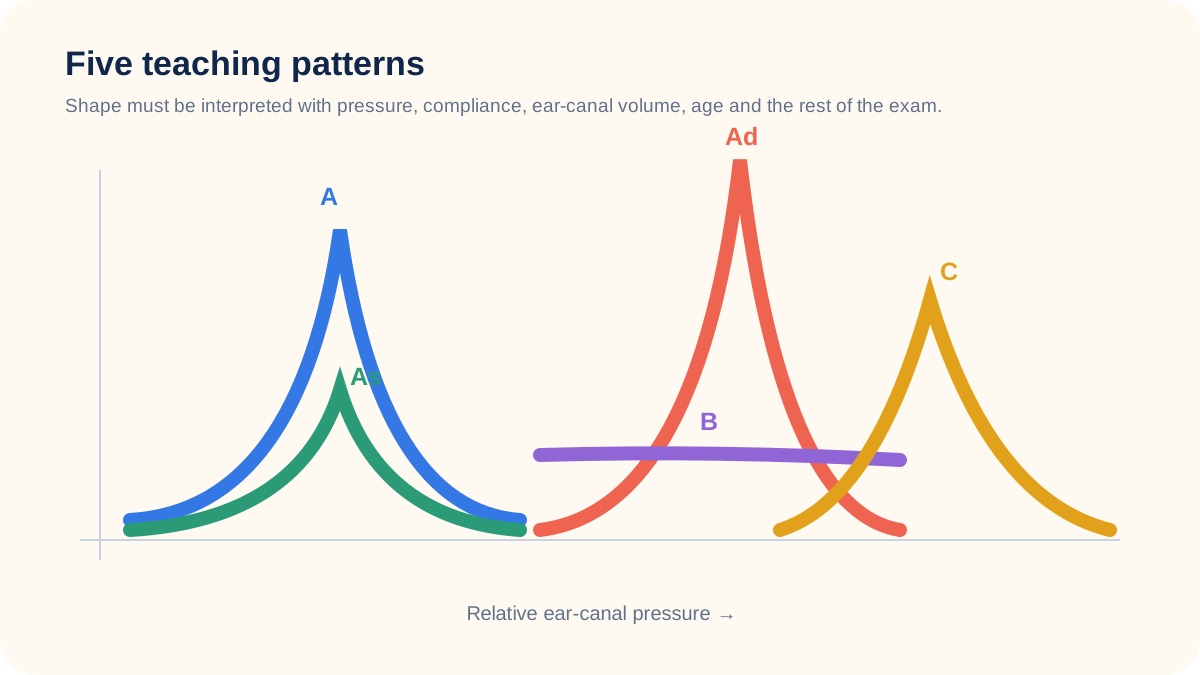
Air-conduction thresholds may be poorer than bone-conduction thresholds, creating an air–bone gap. Tympanometry can add information about middle-ear mobility and pressure. Speech results and acoustic reflexes may help define the pattern. No one graph identifies every cause.
A worked example
An adult notices muffled hearing after an upper-respiratory illness. Otoscopy and a flat tympanogram with an expected ear-canal volume may support middle-ear fluid, while bone thresholds remain better than air thresholds. Another person with a flat tracing and a large volume may have a different explanation. The clinician combines the evidence before recommending next steps.
Treatment and limitations
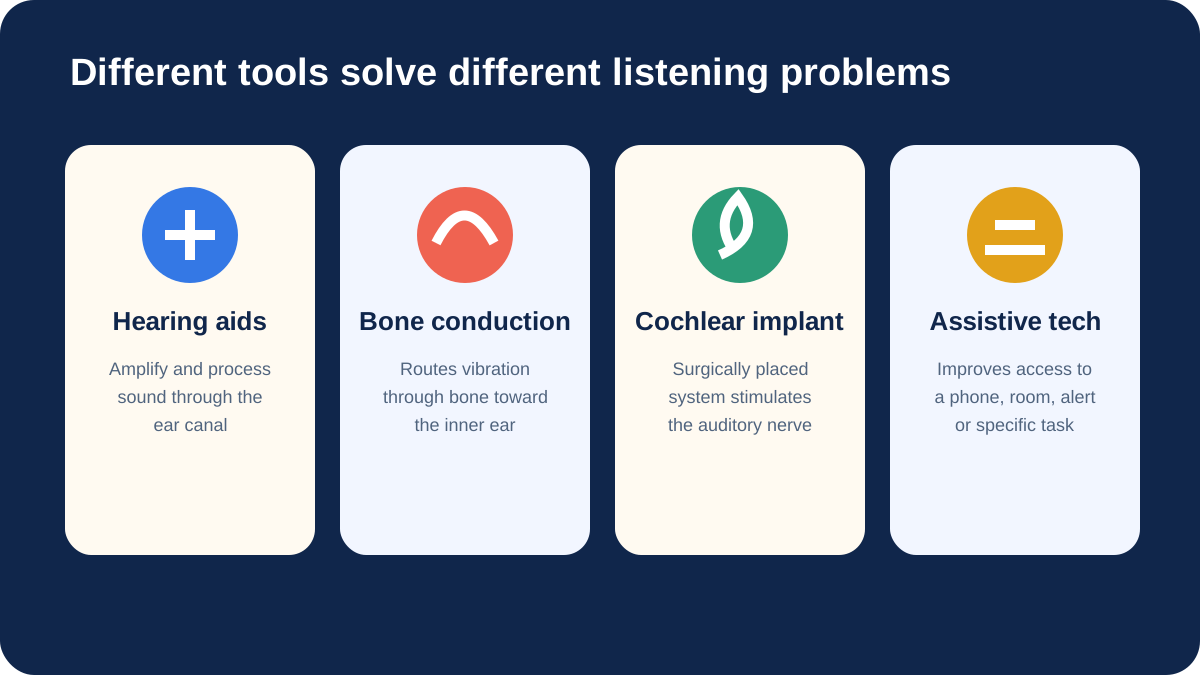
Treatment is cause-specific. Some problems resolve, some need medical or surgical management, and some are addressed with hearing technology. Do not place drops or objects in the ear based only on an online description. A hearing aid can improve access in some conductive or mixed losses, but candidacy depends on anatomy, stability, medical evaluation and individual goals.
When to seek prompt care
Prompt evaluation is important for a sudden change, significant pain, drainage, trauma, a foreign object, new one-sided symptoms or marked dizziness. For a gradual change, schedule a hearing evaluation and bring a list of medications, noise exposure and the situations that are difficult.
What a follow-up plan may include
A follow-up plan can include repeat otoscopy, tympanometry, air- and bone-conduction thresholds, a medical examination or monitoring after an illness. The interval depends on symptoms, age, cause and professional judgment. If treatment changes the conductive component, testing can show whether an air–bone gap closes and whether another component remains.
For work or school, temporary access still matters while the cause is being evaluated. Preferential seating, captions, a remote microphone or written confirmation can reduce the communication impact without assuming the condition is permanent.
Build an evidence record
A conductive component is supported by reliable air and bone thresholds, appropriate masking and compatible ear examination or middle-ear evidence. The size and frequencies of an air–bone gap matter, but they do not name the cause.
Write the date, ear or listening condition, equipment or service involved and the decision the evidence is meant to support. Preserve the original report or agreement rather than a cropped screenshot. When two results disagree, record the mismatch and ask what additional check would resolve it. Reliable decisions make uncertainty visible instead of silently converting it into certainty.
Worked decision
An ear shows reduced low-frequency air thresholds, near-typical masked bone thresholds and a flat tympanogram with typical canal volume after an upper-respiratory illness. Fluid may be considered, but examination and follow-up determine the clinical conclusion.
This example shows why the same label can lead to different actions. The recommended next step follows the measured barrier, urgency and complete context. It does not assume that a more expensive device, a louder setting or a single test result is automatically more useful.
Prepare and verify the next step
Record timing, pressure, pain, drainage, surgery and infection history. Ask whether medical treatment, monitoring or repeat testing is recommended before amplification decisions.
Choose a repeatable task and define success before the change. Record distance, noise, speaker, program, comfort, handling and any failure. Repeat the task after adjustment and keep a backup communication route while evidence is incomplete or equipment is unavailable.
At follow-up, compare the result with the original goal rather than asking only whether the person “likes it.” Confirm what improved, what remained difficult, whether setup was independent and whether the solution worked for other speakers or rooms. Document maintenance, repair and retesting responsibilities so a successful trial can become dependable daily access.
Share only the information needed for the decision. A clinician may need symptoms and test history, while an employer may need the functional barrier and proposed access method rather than a complete medical record. Clear boundaries protect privacy and keep the discussion focused on the task.
Important boundary
Do not diagnose wax, fluid, perforation or ossicular change from a screenshot; several conditions and test artifacts can create superficially similar patterns.
Seek prompt professional care for sudden hearing change, severe pain, drainage, acute dizziness, neurologic symptoms or a retained object. Product features, policies and official guidance can change; verify current instructions and primary sources when the decision affects health, safety, money or legal rights.
Sources and review notes
Sources were checked for this editorial update on September 26, 2026. External guidance can change; follow the linked source for the current version.
This page provides education, not an individual diagnosis, treatment plan, legal opinion or billing decision. Historical expert contribution is credited only where supported by the original project record; it does not imply review of this update.