Why aided performance matters
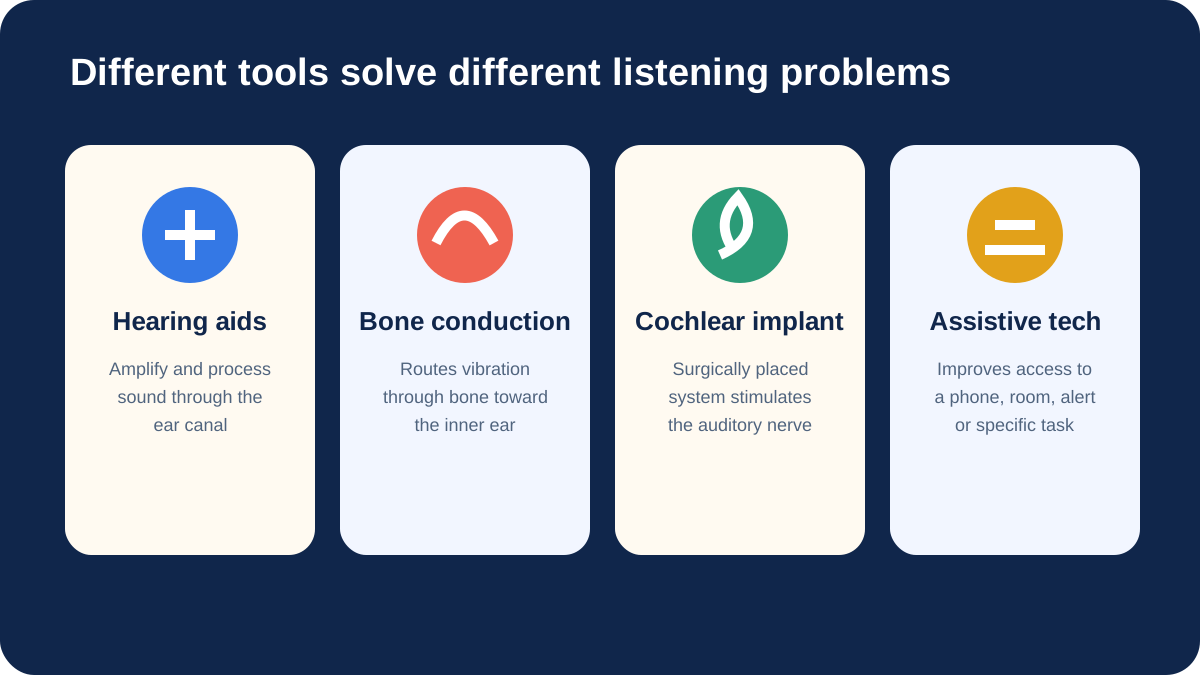
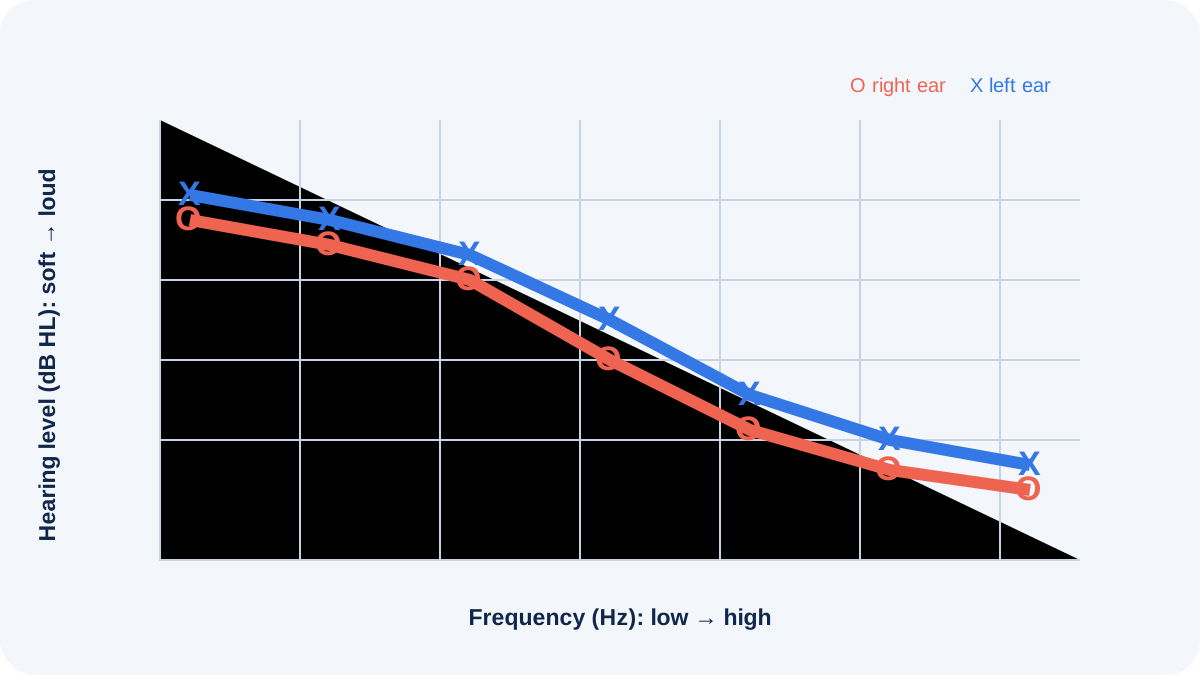
An unaided audiogram describes the softest tones detected through earphones, but it does not fully show how a person understands speech with well-fitted hearing aids. An implant team commonly reviews current hearing aids, verifies their output and measures aided speech performance under defined conditions. This helps distinguish limited technology setup from limited benefit despite appropriate amplification.
Testing may include words or sentences in quiet and noise, each ear separately and together when appropriate. Results are interpreted with language, listening history and daily communication rather than treated as a universal pass/fail number.
The medical and imaging pathway
The medical assessment considers ear health, prior surgery, infections, general health and whether surgery or anesthesia presents additional risk. CT or MRI imaging may be used to examine inner-ear and auditory-nerve structures. Vaccination guidance, medication planning and device-specific MRI conditions should be discussed with the implant center using current instructions.
Product marketing cannot determine medical suitability. Anatomy, hearing history and the team’s current criteria matter more than a brand comparison.
What changes after surgery
The external processor and internal implant form a system. After healing, the processor is activated and programmed in appointments often called mapping. Sound may initially be unfamiliar. Repeated listening experience, mapping changes and rehabilitation help the brain use the new signal. Outcomes vary, and progress can differ between speech in quiet, noise, music and localization.
A practical candidate scenario
An adult wears verified hearing aids consistently but still cannot understand most telephone speech or follow meetings without captions. The team reviews aided speech scores, goals, anatomy and support. The decision is not that hearing aids “failed” in every sense; they may still support the nonimplanted ear or work bimodally with the implant.
Questions for an implant center
- Were my current hearing aids verified before aided testing?
- Which tests and listening conditions drive the recommendation?
- What outcomes are realistic for my history?
- What rehabilitation, mapping and travel are required?
- How do MRI, warranty, upgrades and processor replacement work?
Compare a lifetime support system
Consider the implant center, mapping access, rehabilitation, accessory ecosystem, waterproof options, phone and public-system connectivity, future processor support and insurance pathway. Ask how urgent repairs are handled and what backup equipment is available. The implanted component is a long-term decision, while external technology changes over time.
A defensible choice is built with the treating team and the person’s goals. This guide provides preparation, not candidacy determination.
Activation is the beginning of measurement
The first activation establishes an initial usable program; it is not a final result. The team adjusts electrical levels and programs over repeated visits while watching comfort, audibility and speech access. The user should report which real situations improve, which sounds remain confusing and how long the processor is worn. Families and communication partners can support practice without turning every conversation into a test.
Keep copies of aided test results and mapping summaries when available. They provide a baseline for later changes and help a new clinic understand the history. If progress stalls, the team can review device use, equipment function, mapping, rehabilitation, language and cognitive or visual factors rather than assuming a single cause.
Bimodal and bilateral questions
Some people use an implant on one side and a hearing aid on the other; others may be evaluated for two implants. Ask how devices are balanced, which ear is expected to provide which information and how streaming or remote microphones reach both sides. Benefit should be assessed for each device and the combined condition.
Localization and hearing in noise can remain difficult. Seating, captions and remote microphones may still be important after implantation. An implant is part of a communication system, not a reason to remove other effective access methods.
Prepare for the evaluation visit
Bring recent and older audiograms, hearing-aid model and fitting information, a medication and medical-history list, insurance information when relevant, and a short description of the communication situations that remain difficult. Note which ear uses which device and how many hours it is worn. A communication partner can describe observations, but the candidate’s own goals and preferences remain central.
Ask how to make the evaluation itself accessible. Captions, an assistive listening system, written instructions or an interpreter may be needed before any implant decision can be genuinely shared. Request copies of results and the team’s reasoning. If the recommendation is to continue optimized hearing aids, the visit should still produce useful next steps rather than being treated as a failed application.
Sources and review notes
Sources were checked for this editorial update on October 12, 2026. External guidance can change; follow the linked source for the current version.
This page provides education, not an individual diagnosis, treatment plan, legal opinion or billing decision. Historical expert contribution is credited only where supported by the original project record; it does not imply review of this update.