Three different routes
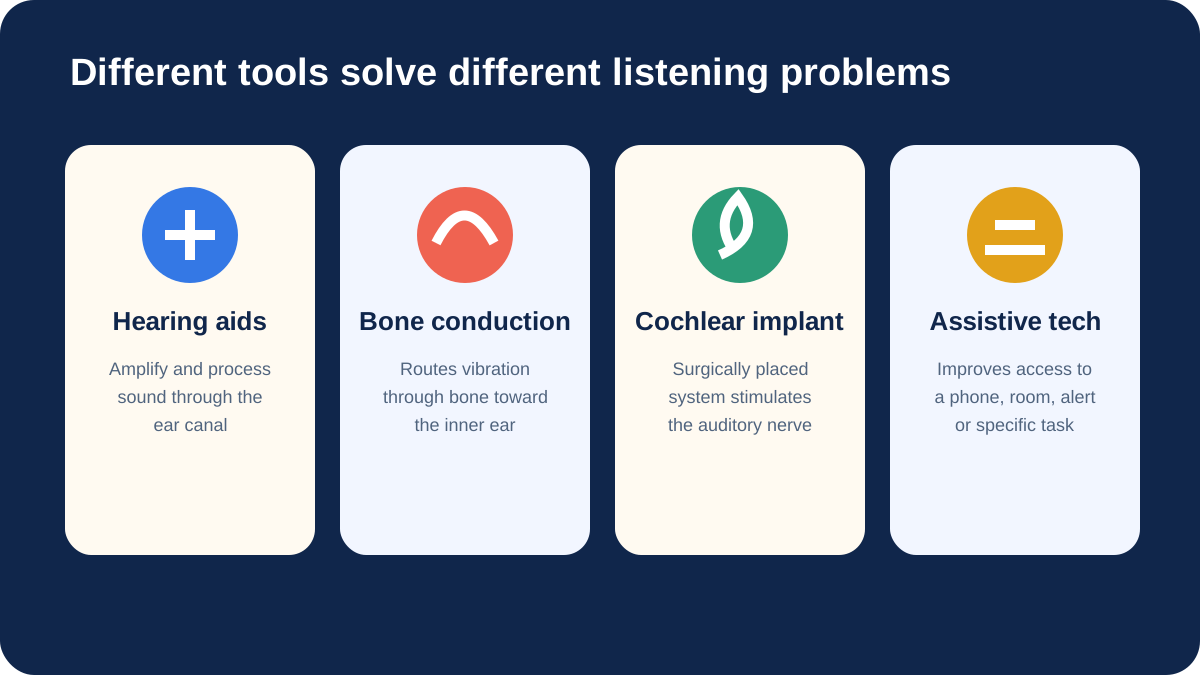
A CROS transmitter sits on the side with very limited usable hearing and sends its microphone signal to a receiver on the better-hearing ear. BiCROS uses the same routing while also providing amplification for hearing loss in that better ear. Bone-conduction options bypass parts of the outer or middle ear and stimulate the cochlea through vibration.
What routing can and cannot change
Routing can reduce the head-shadow problem when a talker is on the poorer side. It does not create independent input to two functioning ears, so localization and separating speech from noise may remain difficult. Moving the better ear toward the desired talker and using a remote microphone may still matter.
Assessment questions
Ask about word recognition, hearing stability, ear health, whether amplification provides usable benefit on the poorer side, and which surgical or nonsurgical bone-conduction options are relevant. Trial conditions should include speech from different directions and realistic background noise.
Worked scenario
In a car, the passenger’s voice reaches a driver’s poorer-hearing side. A CROS system may route that voice to the better ear, but road noise routed from the poorer side can also be distracting. A real-world trial should test both desired speech and unwanted sound, not merely quiet-office audibility.
Next steps
Keep expectations specific: hearing a colleague seated on one side, following conversation while walking or detecting a sound source. Compare routing, remote microphones, seating and visual communication. Sudden or unexplained one-sided change needs medical evaluation before a technology decision.
Measure the problem in directions
One-sided hearing difficulties are highly directional. Write down where the desired talker and the main noise source are located. A routing system can help when speech arrives on the poorer side, yet may route unwanted noise from that side as well. In a restaurant, seating may determine whether the system helps. In a classroom, a remote microphone worn by the instructor may provide a cleaner route than transferring every sound near the poorer side.
A useful trial therefore alternates directions: speech to the poorer side, speech to the better side, noise to each side and speech from the front. Include walking, driving as a passenger, group conversation and awareness of environmental sounds. Record what becomes easier and what becomes more distracting.
Compare non-surgical and implant pathways carefully
Bone-conduction technology includes nonsurgical devices worn on a band or adhesive adapter and surgically implanted components. Candidacy, power, skin comfort, retention and expected benefit differ. A demonstration through a temporary wearing method can help a person understand the character of the sound, but it is not identical to a completed surgical fitting.
Discuss medical status, cochlear function, speech understanding, anatomy, daily wearing conditions and long-term processor support with the appropriate team. Ask how outcomes are measured and what alternative remains if the first route is not tolerated. No routing system should be presented as restoring ordinary binaural hearing; the goal is improved access for specified situations.
Add communication strategies to the technology
Routing does not remove the value of positioning, lighting and visual access. In a group, place the better ear toward the most important talker when practical, reduce competing noise from that side and ask people to identify themselves before speaking. In a vehicle, safety takes priority; the driver should not turn away to lip-read.
Remote microphones can complement or sometimes outperform side-to-side routing for a specific distant talker. Captions can carry names and numbers that remain difficult through audio alone. Build the plan around the recurring task and compare combinations. The strongest outcome may be a modest device benefit plus reliable environmental and communication changes.
Track benefit over time
After fitting, review the situations named before the trial and ask whether access improved from the poorer side, whether noise became more distracting and whether the user can manage the equipment. Hearing may change, and surgical or nonsurgical components may need adjustment or replacement. Keep baseline and follow-up test results, fitting details and warranty information together. When goals are not met, revisit direction, microphone strategy and alternative technology rather than assuming all one-sided support has failed.
Sources and review notes
Sources were checked for this editorial update on October 12, 2026. External guidance can change; follow the linked source for the current version.
This page provides education, not an individual diagnosis, treatment plan, legal opinion or billing decision. Historical expert contribution is credited only where supported by the original project record; it does not imply review of this update.