
Devices & Technology
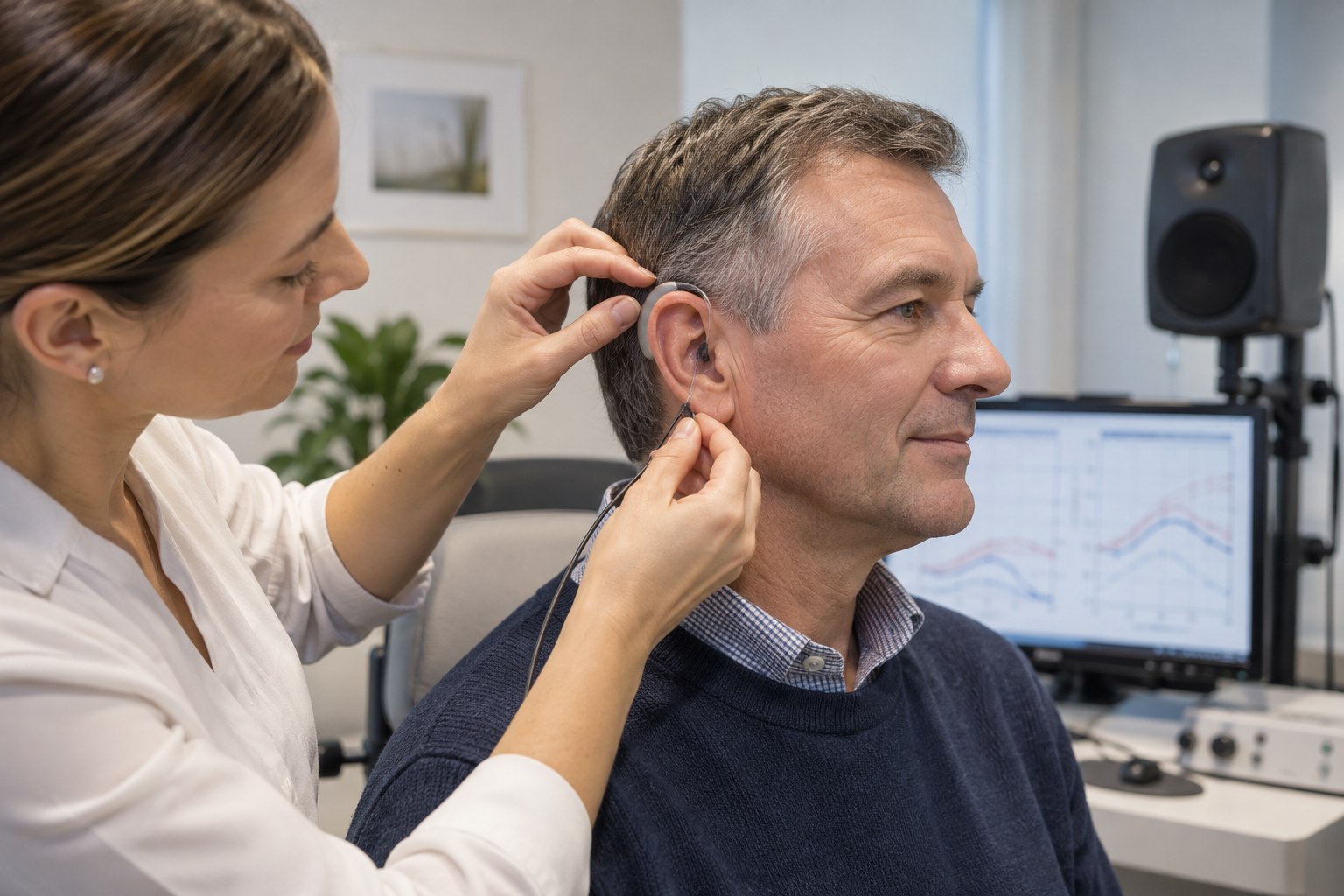
Real-Ear Measurement: Verifying a Hearing-Aid Fitting
Real-ear measurement checks what a hearing aid actually delivers in an individual ear canal and helps turn a prescription into a verifiable fitting.
Read guideMatch hearing devices and access technology to the pathway, setting and communication task.
Real-ear measurement checks what a hearing aid actually delivers in an individual ear canal and helps turn a prescription into a verifiable fitting.
Read guide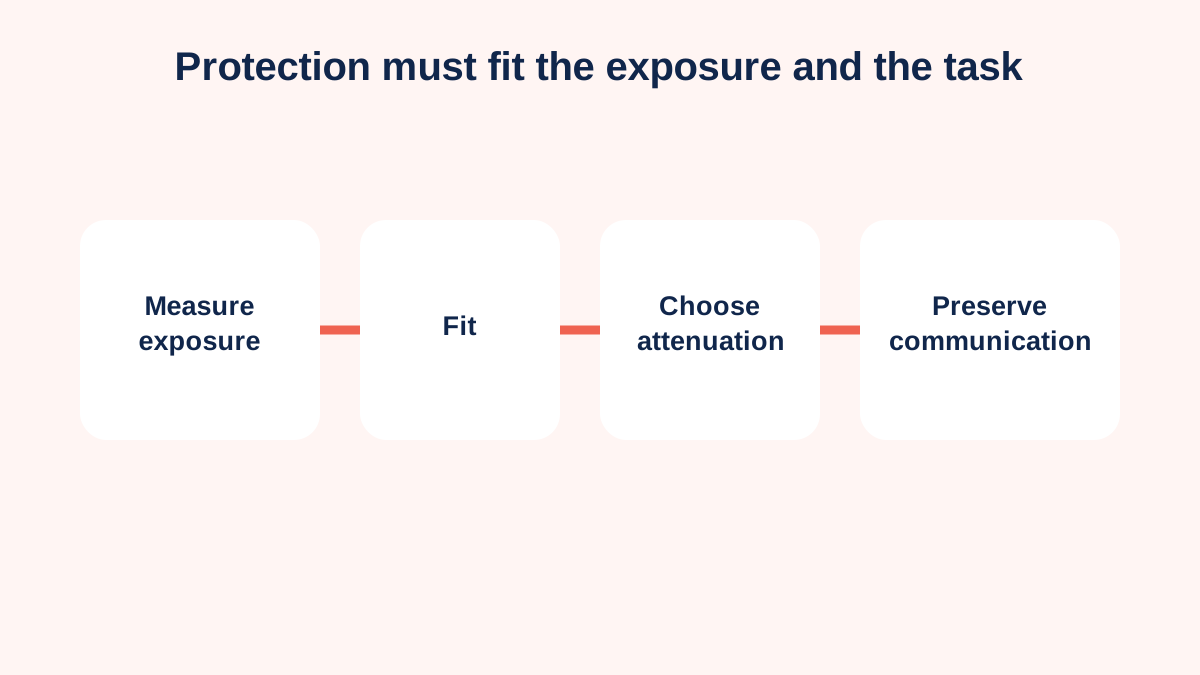
Protection must reduce hazardous exposure while remaining wearable and compatible with communication and safety tasks. Too little and too much attenuation can both create problems.
Read guide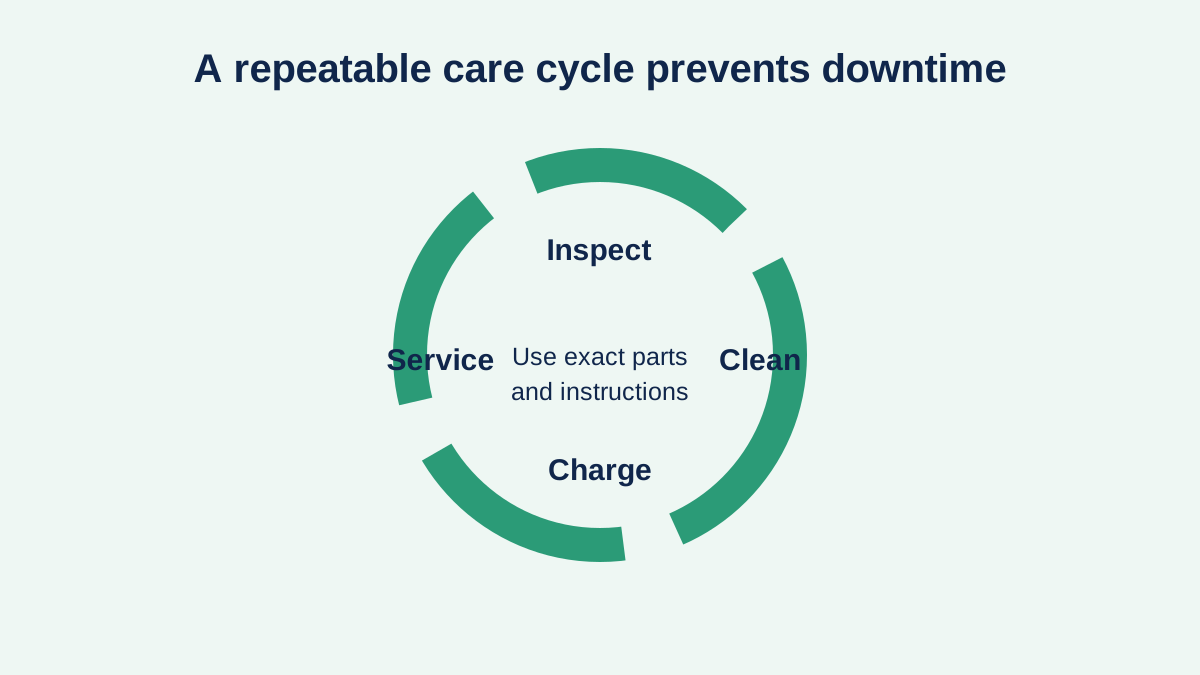
Routine care protects sound openings, power and physical fit. It should follow the exact manufacturer instructions because filters, domes, earmolds and water resistance differ.
Read guide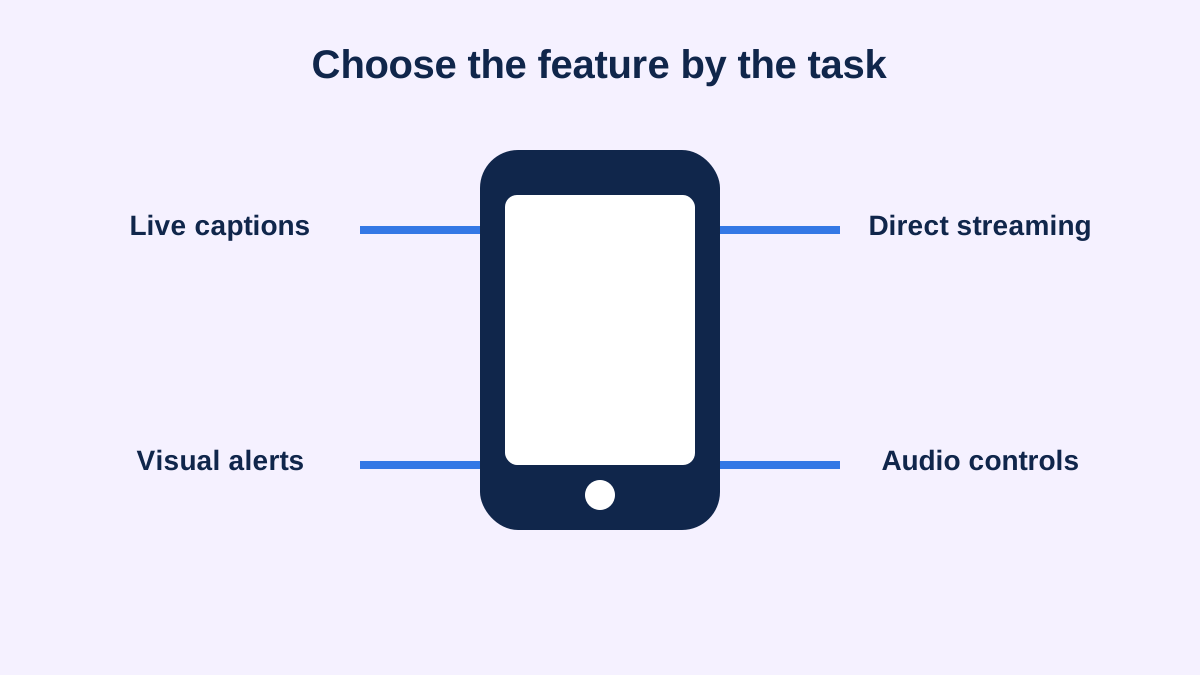
A phone can add captions, route audio and transform alerts, but settings vary by operating system, model, region, app and connected hearing device.
Read guide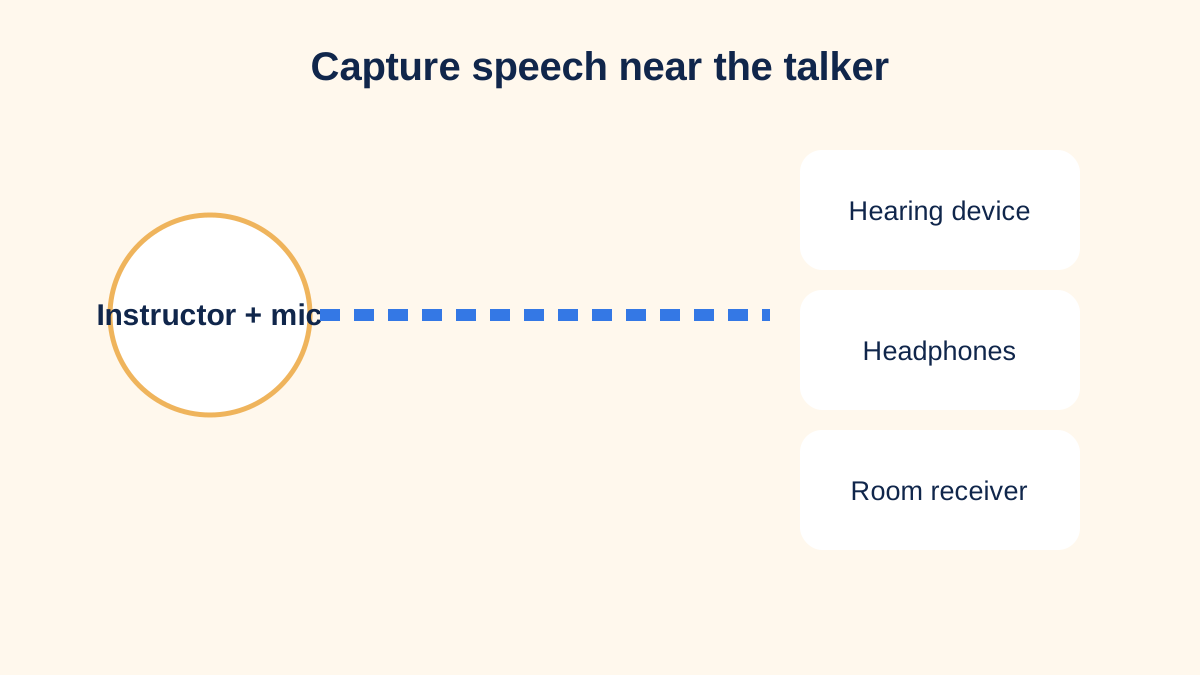
FM and DM systems are remote-microphone pathways. Their value comes from placing a microphone near the desired talker and delivering that cleaner signal to a compatible receiver.
Read guide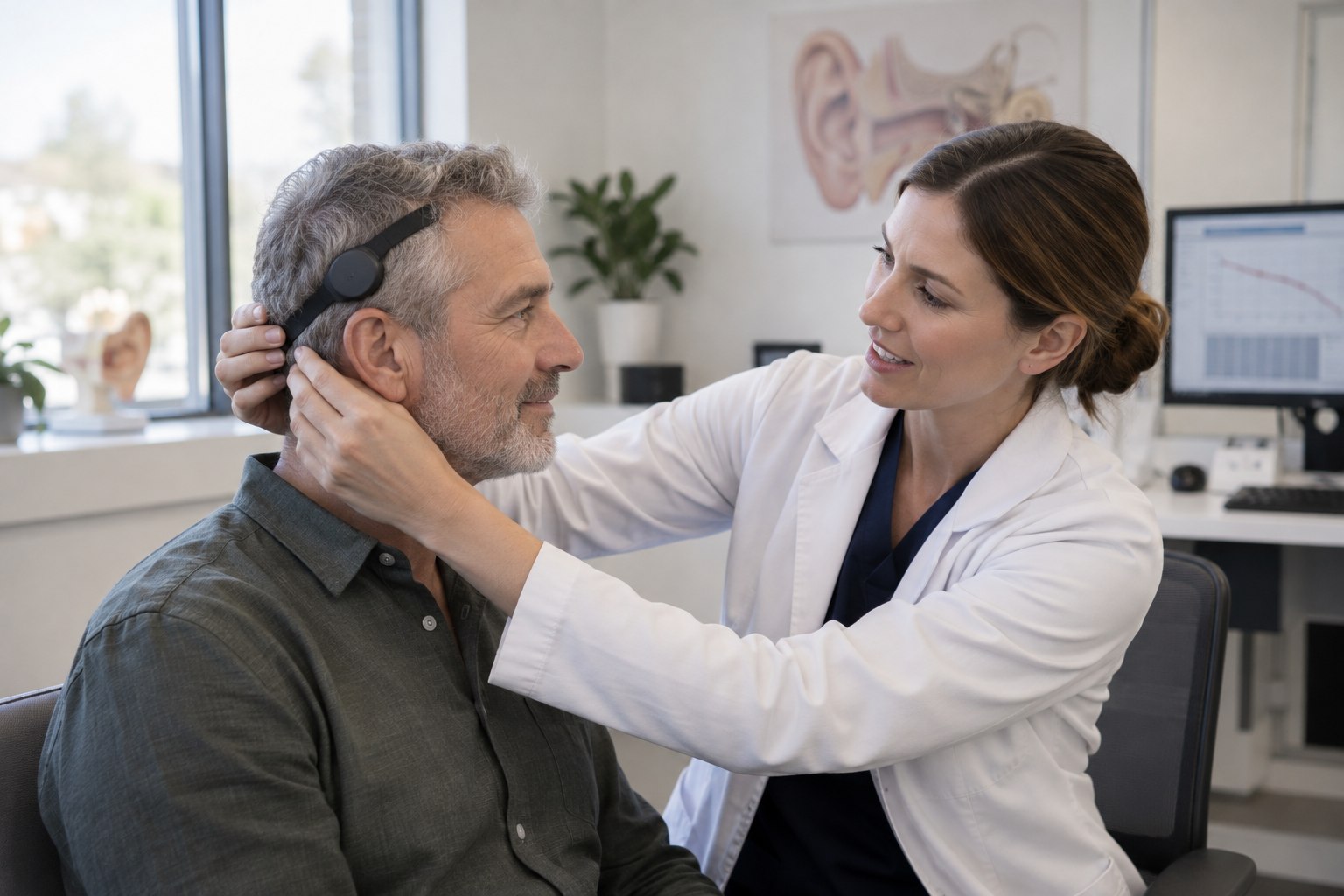
Bone-conduction systems transmit vibration through the skull toward a functioning cochlea. The choice depends on ear condition, cochlear reserve, anatomy, wearing needs and professional evaluation.
Read guide
An implant evaluation is not a single audiogram cutoff. A specialist team considers aided access, speech understanding, anatomy, health, communication goals and realistic rehabilitation needs.
Read guide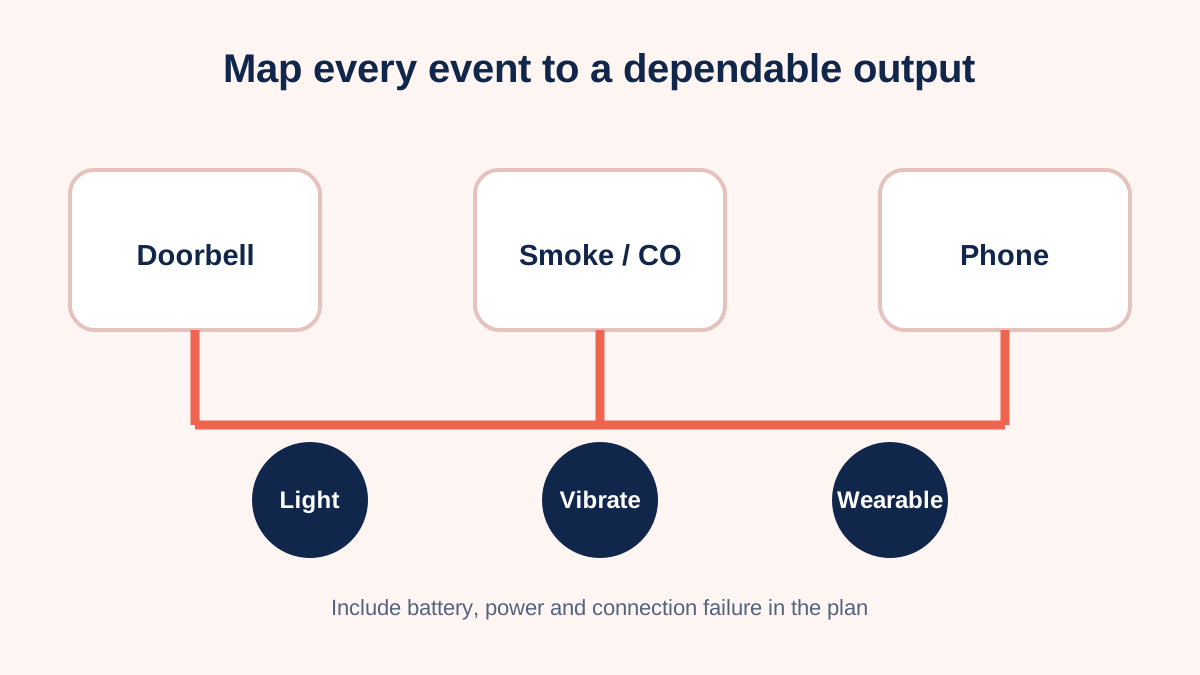
A useful alerting plan matches each important event to more than one dependable sensory channel and includes power and failure checks.
Read guide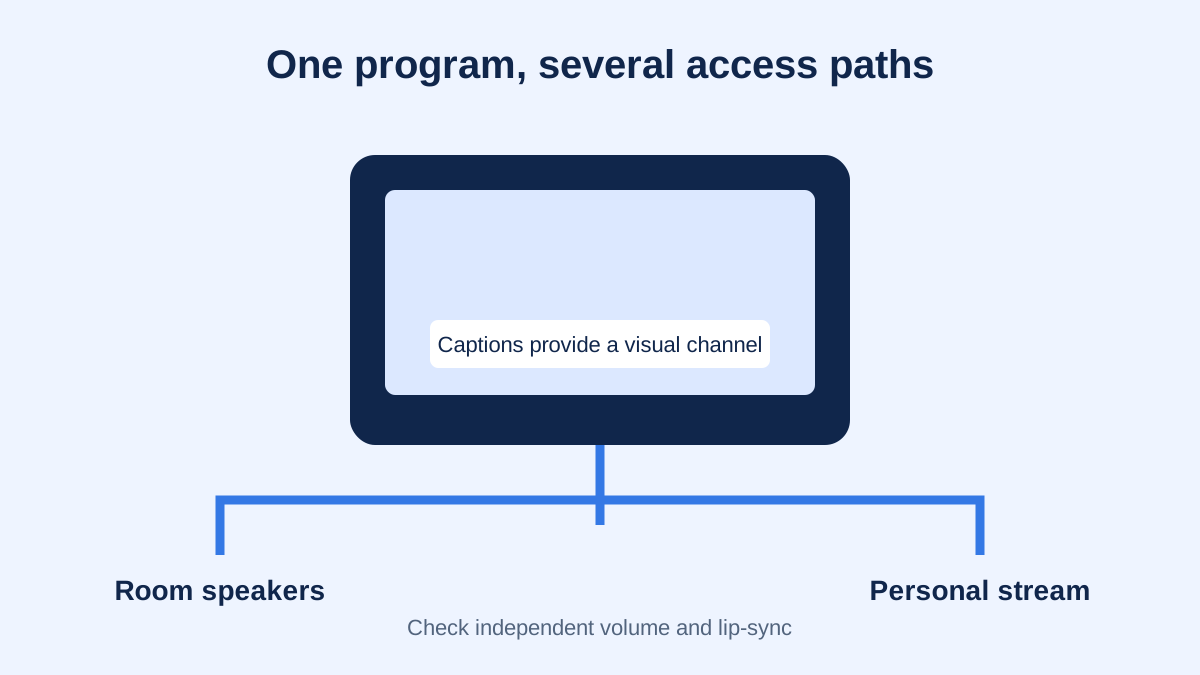
The best TV setup may combine a visual channel with a cleaner personal audio signal while leaving independent volume for other viewers.
Read guide